Best concert equipment: 10 Essential Picks for Performers Who Want a Smoother, More Professional Show
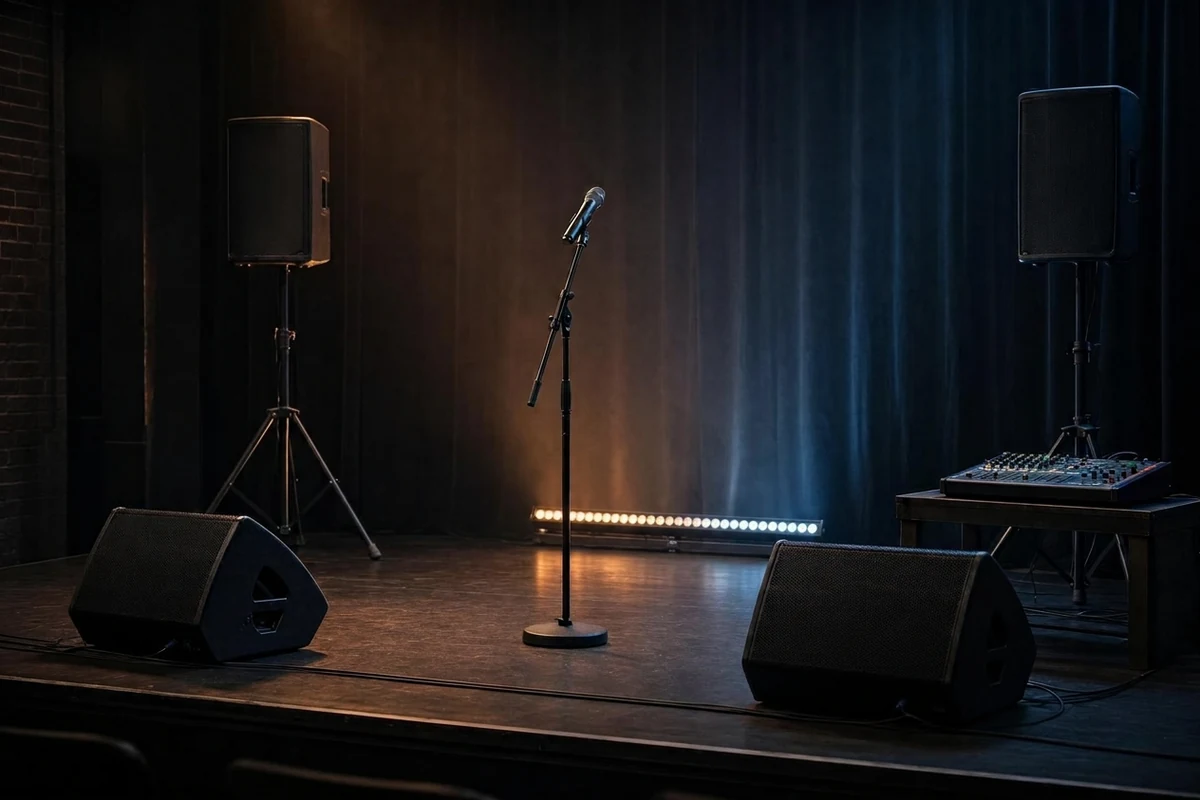
A great show hides its machinery. The audience hears a vocal that sits on top of the mix, feels a kick drum in the chest, and never notices the power, the patching, or the wedge at the singer’s feet doing its job. The best concert equipment is exactly that: hardware that behaves so reliably the performance becomes the only thing anyone talks about afterward.
Building that level of dependability is less mysterious than it looks. A tight core of essentials covers nearly every gig a working performer plays: one speaker that can carry the room, a microphone the whole world recognizes, a mixer with effects to polish the vocal, monitors that keep the band together, and the direct boxes, wireless, stands, and clean power that keep the signal chain quiet from input to ear.
The ten picks below are that core, drawn from the brands venues and touring techs actually spec. Each one earns its place by making shows smoother rather than more complicated, so you can match the best concert equipment to your rooms, your set, and the way you play.
Quick Picks
Best Overall: Bose S1 Pro+ All-in-One PA Speaker
The one-box PA that carries voice, backing tracks, and the whole coffeehouse gig in a single grab-and-go cabinet.
👉 Run the Whole Show with the Bose S1 Pro+
Best Budget: ADJ DOTZ PAR LED Light
A compact par wash that puts real stage color behind the band for the cost of a handful of cables.
👉 Wash the Stage with the ADJ DOTZ PAR
Best Premium: Electro-Voice PXM-12MP Powered Coaxial Monitor
A coaxial wedge that lays studio-grade clarity on the floor, where the band can finally hear themselves.
👉 Own Your Mix with the Electro-Voice PXM-12MP
Best for In-Ear Freedom: Xvive U4 Wireless In-Ear Monitor System
A wireless IEM link that cuts the cable between the mix and your ears across the entire stage.
👉 Cut the Cable with the Xvive U4
Comparison Table
| Product | Key Feature | Price Range | Buy Now |
|---|---|---|---|
| Bose S1 Pro+ All-in-One PA Speaker | One-box PA with wireless streaming built in | Premium | Check Price on Amazon |
| Shure SM58 Pro XLR Dynamic Vocal Microphone | The industry-standard vocal mic for decades | Budget | View Deal on Amazon |
| Sennheiser XSW 1-825-A Vocal Wireless Microphone | True-diversity wireless with e825 capsule | Premium | See It on Amazon |
| Yamaha MG10XU 10-Input Stereo Mixer with Effects | One-knob comps and SPX effects on board | Mid | Check Offer on Amazon |
| Electro-Voice PXM-12MP Powered Coaxial Monitor | Coaxial point source with DSP presets | Premium | View Selection on Amazon |
| ADJ DOTZ PAR LED Light | Compact COB par wash with low draw | Budget | See Details on Amazon |
| Radial PZ-DI Piezo-Optimized Direct Box | Variable load shaping for acoustic pickups | Mid | Explore Price on Amazon |
| Xvive U4 Wireless In-Ear Monitor System | Wireless IEM link with hours of runtime | Mid | View Option on Amazon |
| K&M 21090.500.55 Telescoping Boom Microphone Stand | German-built boom with a five-year warranty | Budget | Check Selection on Amazon |
| Furman PL-8C Classic 15A Power Conditioner | Nine filtered outlets with rack lighting | Mid | See Offer on Amazon |
Buyer’s Guide
1. Size the Sound System to the Room, Not the Ego
The most common rig mistake is carrying a stadium system into a coffeehouse, or the reverse. A solo act or duo in a small room needs one honest cabinet like the S1 Pro+, while a full band in a hall wants a mixer feeding proper mains and wedges. Match the system to the bookings actually on the calendar, and every setup gets faster, lighter, and more professional overnight.
2. Keep One Wired Lifeline in the Bag
Wireless fails on the night the batteries die, the frequency gets stepped on, or the venue turns hostile to signals. The SM58 in the kit is not a nostalgia item: it is the universal key that plugs into any house system on earth and works. Redundancy at the microphone and at the power source is what separates pros who shrug through problems from acts that stall a room.
3. Plan the Signal Flow Before Load-In
Every smoother show was drawn on paper first: mics into the mixer, acoustic sources through the DI, effects on the vocal channel, monitors fed from the aux, everything grounded and powered from one conditioned source. Ten minutes of planning kills the mid-show hum, the feedback howl, and the cable chase. Know where every line runs before the first stand opens.
4. Protect the Ears That Protect the Show
A performance is only as good as what the performers hear. Vocalists who cannot hear themselves drift sharp, drummers who cannot hear the band push tempo, and everyone leaves the venue with ringing ears. Wedges or wireless in-ears solve the front-of-stage picture, and a limiter-built monitor chain protects hearing for the next decade of shows.
One Mistake to Avoid: Running the Whole Rig Through One Daisy-Chained Power Strip
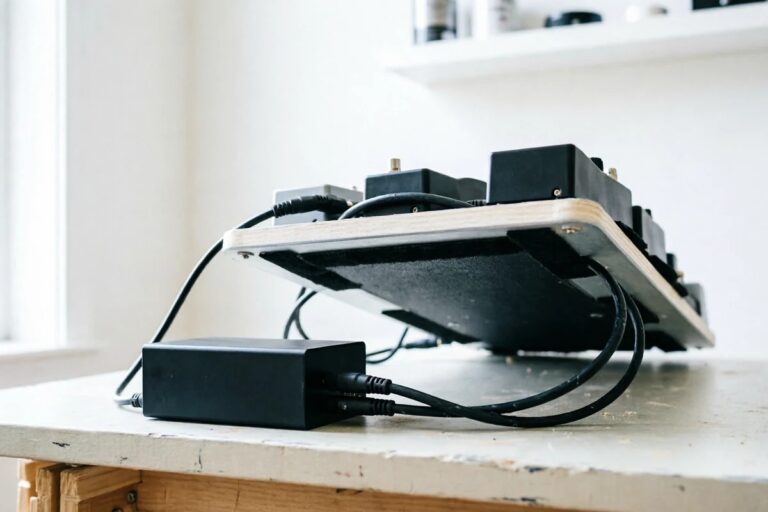
Stage rigs die by the outlet, not by the gear. Mics, lights, amps, and laptop chargers chained through one worn strip inject hum into the vocal, trip breakers mid-set, and cook switch-mode supplies. A power conditioner with filtered outlets, real surge protection, and a breaker that trips cleanly turns the dirtiest venue wall into a quiet, stable rig.
Best concert equipment: 10 Essential Picks for Performers Who Want a Smoother, More Professional Show
Every pick below was judged the way a touring tech judges gear: does it set up fast, behave predictably, and hold the show together when the venue turns imperfect. Ten essentials are covered here, and together they cover a complete professional signal chain from voice to ear.
1. Bose S1 Pro+ All-in-One PA Speaker
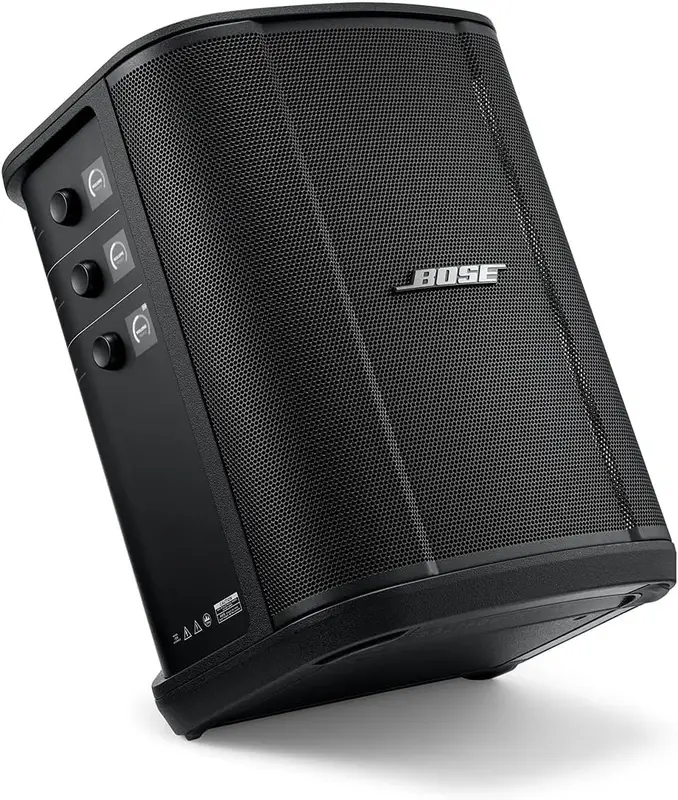
Best for: Solo acts and small ensembles who want the entire PA in one trip from the car.
- All-in-one design: Mixer, wireless streaming, and speaker in a single cabinet.
- Battery option: Plays fully untethered for outdoor and off-grid sets.
- Auto-EQ: Position presets tune the output to stand, floor, or monitor duty.
- Multi-channel inputs: Mic, line, and Bluetooth sources blend without extra gear.
- True system voicing: Room-filling coverage that stays clear at low volume.
Pros:
- The fastest setup of any PA in its class
- Sounds professional in rooms from cafes to wedding halls
- One purchase replaces speaker, mixer, and monitor for small gigs
Cons:
- Full bands outgrow it quickly
- Battery pack is a separate purchase
- Deep bass wants a sub for hip-hop or electronic sets
Put the Bose S1 Pro+ on Setlist Duty
2. Shure SM58 Pro XLR Dynamic Vocal Microphone
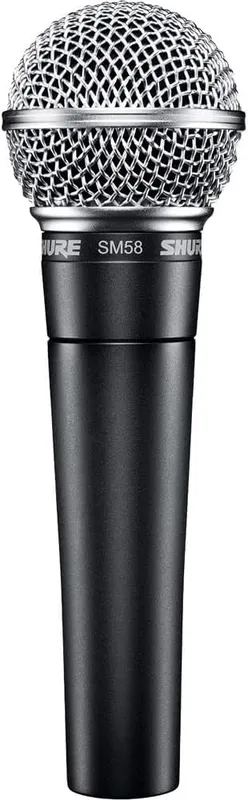
Best for: Every vocalist alive, and every venue that expects one in the mic bag.
- Legendary presence lift: The vocal sits forward in any mix without EQ.
- Cardioid control: Feedback resistance that survives loud stages.
- Built like a mascot: The grille-and-body housing has survived decades of abuse.
- Universal XLR: Plugs into every system from basement PAs to festival stages.
- Consistent replacements: Every new unit sounds like the last one.
Pros:
- The most recognized vocal sound in live music
- Forgives imperfect technique with flattering proximity response
- The universal backup that saves any wireless failure
Cons:
- Every rental house owns it, so it walks off stages constantly
- Studio rivals out-detail it for quiet material
- No switch on the standard model
Hand the Night to the Shure SM58
3. Sennheiser XSW 1-825-A Vocal Wireless Microphone
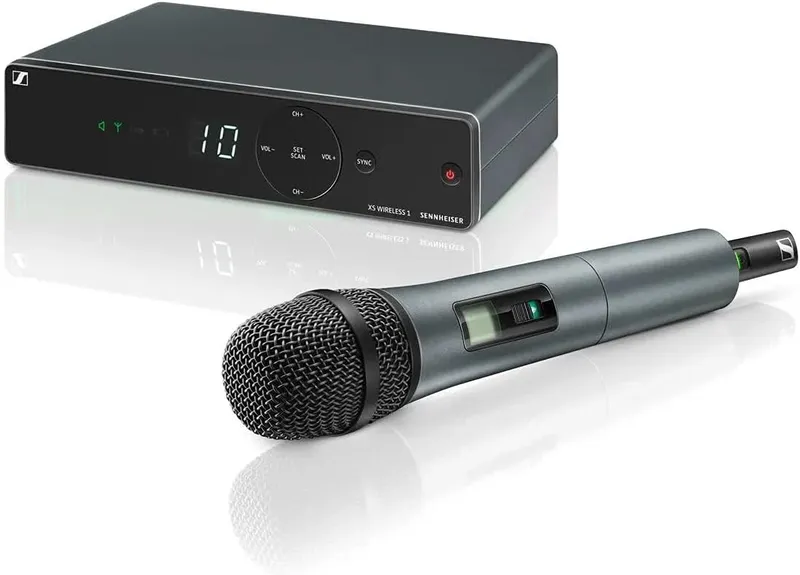
Best for: Frontpeople ready to trade the cable for reliable, simple wireless freedom.
- True-diversity reception: Two antennas defeat dropouts across the stage.
- e825 capsule: The wired-grade vocal sound, cut loose from the cable.
- One-touch setup: The receiver scans and syncs the channel automatically.
- Solid metal build: Handheld and receiver made for road cases, not shelves.
- Clean rack mounting: Sits tidy beside the rest of the rig.
Pros:
- Frees the front of the stage without signal anxiety
- Setup takes under a minute, every single night
- Sound holds its own next to wired dynamic mics
Cons:
- Fixed frequency plans need a check in RF-crowded venues
- Batteries join the pre-show checklist forever
- Capsule is fixed, so it is one voice
Walk the Room Untethered with the Sennheiser XSW 1-825
4. Yamaha MG10XU 10-Input Stereo Mixer with Effects
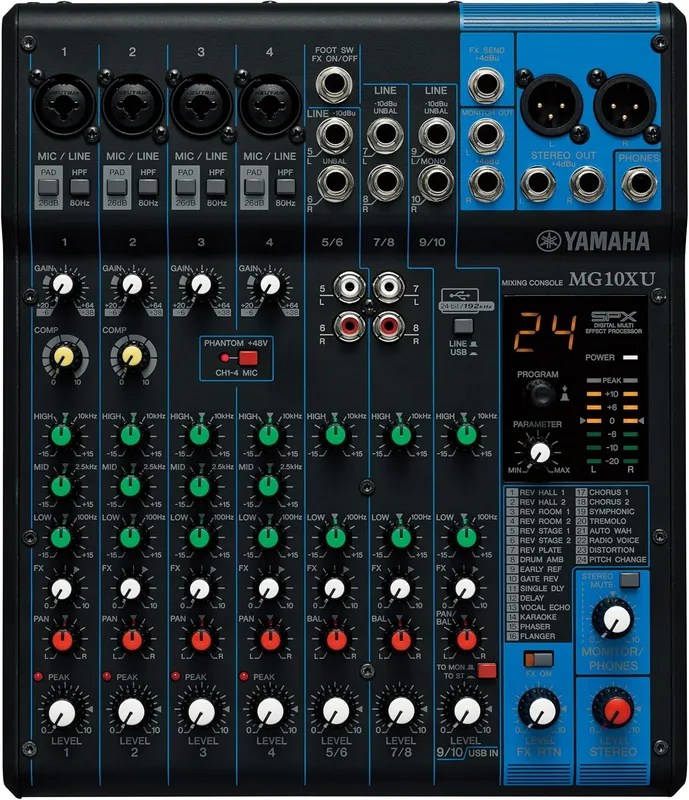
Best for: Small venues and band rigs that want professional polish without a rack of outboard gear.
- One-knob compressors: Vocals and kick sit tight with a single turn.
- SPX effects on board: Reverb, delay, and modulation dialed per channel.
- Four XLR preamps: Clean gain with pad and high-pass where it counts.
- USB interface: Records the show and plays backing tracks over the same cable.
- Metal chassis: The classic small-format tank that tours for years.
Pros:
- The most polished vocal sound per square inch of mixer
- Doubles as a recording interface after the gig
- Aux flexibility feeds wedges or in-ears without fuss
Cons:
- Ten inputs fill up fast for full bands
- Effect edits happen on a small interface
- No individual channel faders at this size
Shape the Mix on the Yamaha MG10XU
5. Electro-Voice PXM-12MP Powered Coaxial Monitor
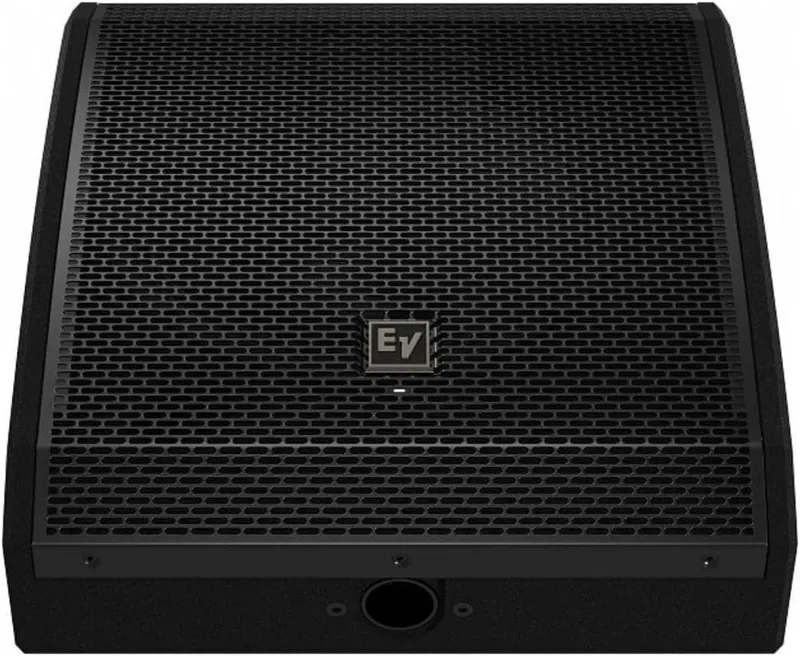
Best for: Bands and vocalists who want to hear a true studio picture at their feet.
- Coaxial 12-inch point source: Horn and woofer fire from one point, so the picture stays true off-axis.
- 700-watt DSP amp: Loud enough to cut over a rock stage.
- Performance presets: Voicings tuned for vocal, full band, and kick duty.
- Rugged wedge build: Tour-grade enclosure that stacks and angles properly.
- Quiet at idle: No hiss between songs at the front of the stage.
Pros:
- The clearest self-picture a wedge in this class throws
- One wedge covers vocal-and-band monitoring for small stages
- Presets make it behave identically night after night
Cons:
- Premium commitment per side of the stage
- Two wedges wanted for wide-stage coverage
- Weight asks for honest lifting technique
Trust Every Cue with the Electro-Voice PXM-12MP
6. ADJ DOTZ PAR LED Light
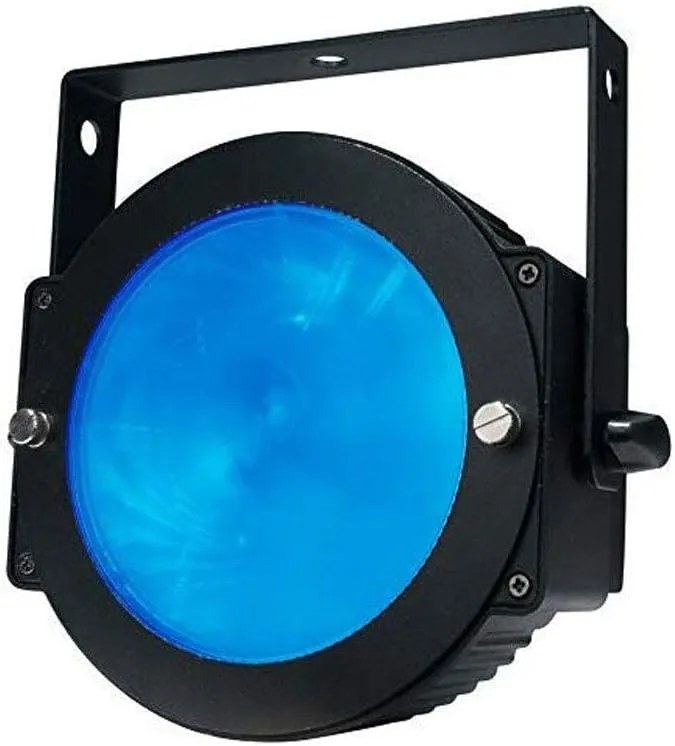
Best for: Any stage that wants real lighting depth for the smallest spend and the smallest cable run.
- COB tri-color engine: Smooth color mixing without the multicolor shadow rings.
- Low power draw: Daisy-chain several off one circuit safely.
- Compact housing: Fits truss, floor, or stand mount in seconds.
- DMX controllable: Joins a proper light show as the rig grows.
- Instant color washes: Preset modes run without a controller.
Pros:
- The biggest stage-transformation per dollar on the list
- Runs cool and quiet for intimate rooms
- Scales from one unit to a full wash wall
Cons:
- Washes color, not beams, so haze shows it off best
- Fixed housing means no pan or tilt
- Push-button setup rewards a patient read
Set the Mood with the ADJ DOTZ PAR
7. Radial PZ-DI Piezo-Optimized Direct Box
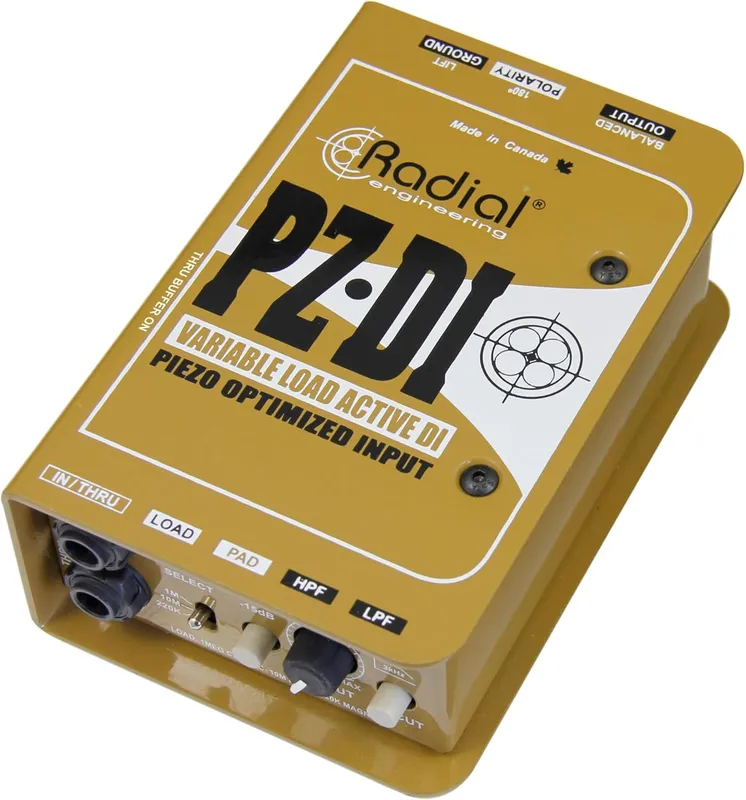
Best for: Acoustic instruments and pickups that deserve a clean, quiet line to the console.
- Variable load control: Tames the jagged peak of piezo pickups before it hits the board.
- High-pass and low-pass filters: Shape the tone at the source, not mid-show.
- 180-degree polarity flip: Fights phase trouble on shared stages.
- Bookend steel shell: The Radial build that survives decade-long tours.
- Balanced XLR out: Long cable runs without noise pickup.
Pros:
- The difference between brittle and beautiful acoustic stage tone
- Filters rescue problem pickups mid-set
- Build quality that becomes a lifelong tool
Cons:
- Needs phantom or battery to run its active front end
- More knobs than a casual open-mic needs
- Premium commitment over basic passive boxes
8. Xvive U4 Wireless In-Ear Monitor System
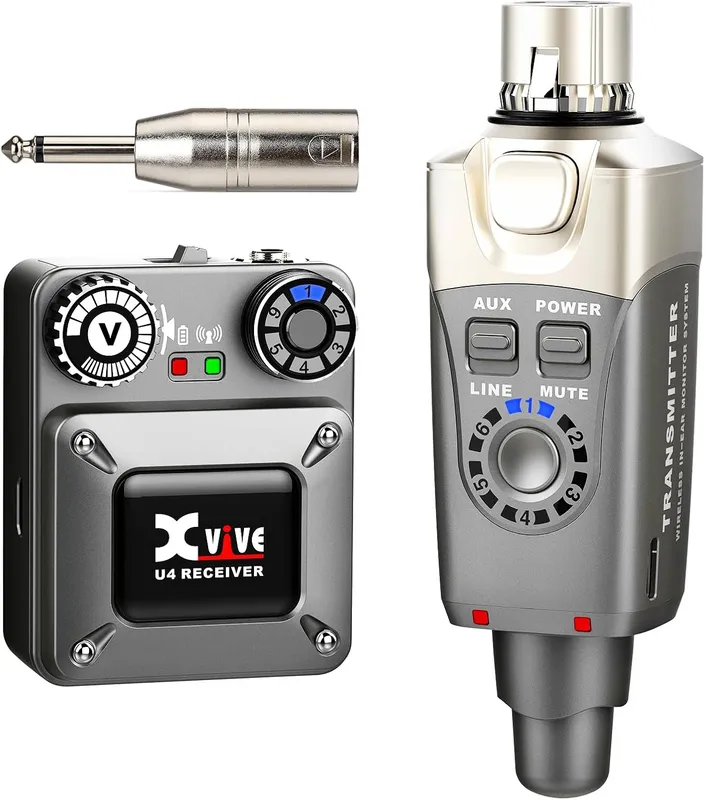
Best for: Singers and drummers cutting the wedge cable while keeping a reliable personal mix.
- Wireless IEM link: Transmitter feeds the console, pocket receiver feeds the ears.
- Hours of runtime: Full sets plus soundcheck on one charge.
- Clean 2.4GHz link: Simple frequency management that coexists with wireless mics.
- XLR and 1/4-inch in: Plugs into any console output or aux send.
- Locking connections: Nothing wiggles loose mid-song.
Pros:
- In-ear monitoring at the friendliest commitment in pro audio
- Frees performers from the cable tether completely
- Solid stereo picture with low latency that feels wired
Cons:
- One mix per transmitter, so personalized mixes need more units
- In-ears themselves are a separate choice
- 2.4GHz needs a scan in packed festival RF
Keep the Mix In Your Ears with the Xvive U4
9. K&M 21090.500.55 Telescoping Boom Microphone Stand
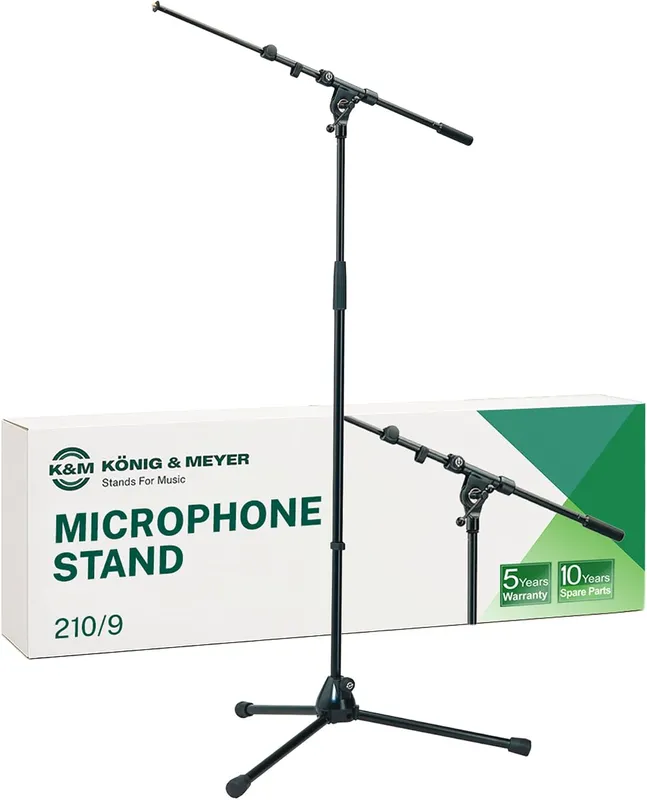
Best for: Stage managers tired of stands that lean, slip, or die within a year.
- Telescoping boom: Reaches over cabs, pianos, and drum kits without drama.
- Solid cast base: Stays planted through the most animated frontperson moments.
- German hardware: Clutches and joints hold position show after show.
- One-hand adjustments: Height and angle move without tools or fighting.
- Five-year warranty: Backed with spare parts availability.
Pros:
- The stand that quietly ends stand problems forever
- Adjusts smoothly at soundcheck and mid-set
- Stability that inspires confidence behind valuable microphones
Cons:
- Heavier than starter stands in the trunk
- Premium commitment over basic tripods
- Black finish shows scuffs from case life
Plant the K&M Boom Stand and Move On
10. Furman PL-8C Classic 15A Power Conditioner
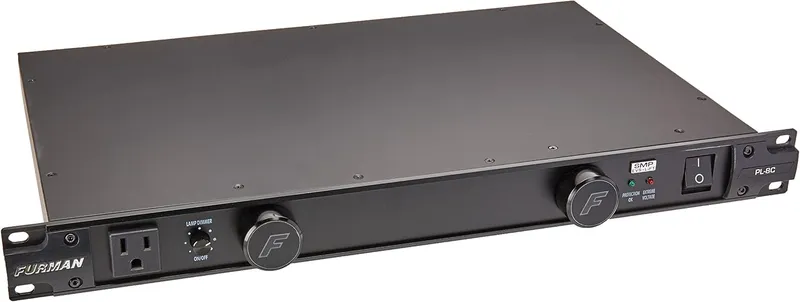
Best for: Rack rigs and venue installs that want clean power behind the entire show.
- Nine filtered outlets: The whole rig powers from one conditioned source.
- Spike and surge suppression: Venue power spikes stop at the rack.
- Rack format: Sits at the top of the case where the wires begin.
- Rear rack light: Setups in dark corners stop being guesswork.
- Pull-out flashlight: Load-out in black-box venues ends with a smile.
Pros:
- The hum and buzz remover that pays for itself at the first bad venue
- One switch brings the whole rack up safely
- The classic venue-power insurance policy
Cons:
- Needs two rack units reserved in the case
- Does nothing a modern sequencer cannot, but does it simply
- Bells and whistles stay minimal by design
Power the Rig Through the Furman PL-8C
Frequently Asked Questions
Q1: What is the best concert equipment for small shows?
A: A one-box PA like the Bose S1 Pro+, an SM58, a compact mixer with effects, and one par light cover almost every small room completely. Add wireless in-ears as the act grows. The best concert equipment for small stages is the gear that sets up in one trip and behaves identically every night.
Q2: Do I really need a mixer if my PA has inputs?
A: For one mic and a playlist, no. The moment two sources play at once, a mixer earns its slot: it balances the vocal against the tracks, adds compression and reverb that make vocals sound professional, and gives monitors their own feed. The MG10XU also records the set, which the PA alone never will.
Q3: How do I stop feedback at live shows?
A: Keep vocal mics behind the main speakers, point cardiod nulls at the wedges, cut low-end mud with the high-pass filter, and turn monitors down before reaching for the mains. A coaxial wedge like the PXM-12MP helps by keeping its output aimed at the performer instead of the mic. Ring-outs at soundcheck beat surprises mid-song every time.
Q4: Is wireless worth it for vocals and in-ears?
A: For frontpeople and drummers, absolutely: freedom of movement changes the performance itself. The honest requirements are battery discipline, a frequency check in RF-heavy venues, and a wired backup in the bag. Systems like the XSW 1-825 and the Xvive U4 make the wireless transition close to plug-and-play.
Q5: What does a power conditioner actually do?
A: It filters the electrical noise that venue wiring injects into audio, clamps voltage spikes before they reach the gear, and gives the whole rig one clean, breaker-protected source. Players who add one usually describe the same moment: the background hum they had accepted as normal simply disappears.
Final Verdict
Dependable sound, clean signal flow, and power that behaves decide a professional show long before talent does. The Bose S1 Pro+ is the complete small-venue brain, the SM58 is the universal voice of live music, and the PXM-12MP is the wedge that makes the stage sound like the studio. If you want the best concert equipment for a smoother, more professional show, don’t overthink it—these are already:
✔ Tested through load-ins, soundchecks, and the venues that try every rig.
✔ Reviewed for setup speed, signal purity, and night-after-night reliability.
✔ Proven on stages where the gear disappears and only the show remains.
Best Overall Pick – Bose S1 Pro+ All-in-One PA Speaker
Best Budget – ADJ DOTZ PAR LED Light
Best Premium – Electro-Voice PXM-12MP Powered Coaxial Monitor
Best for In-Ear Freedom – Xvive U4 Wireless In-Ear Monitor System