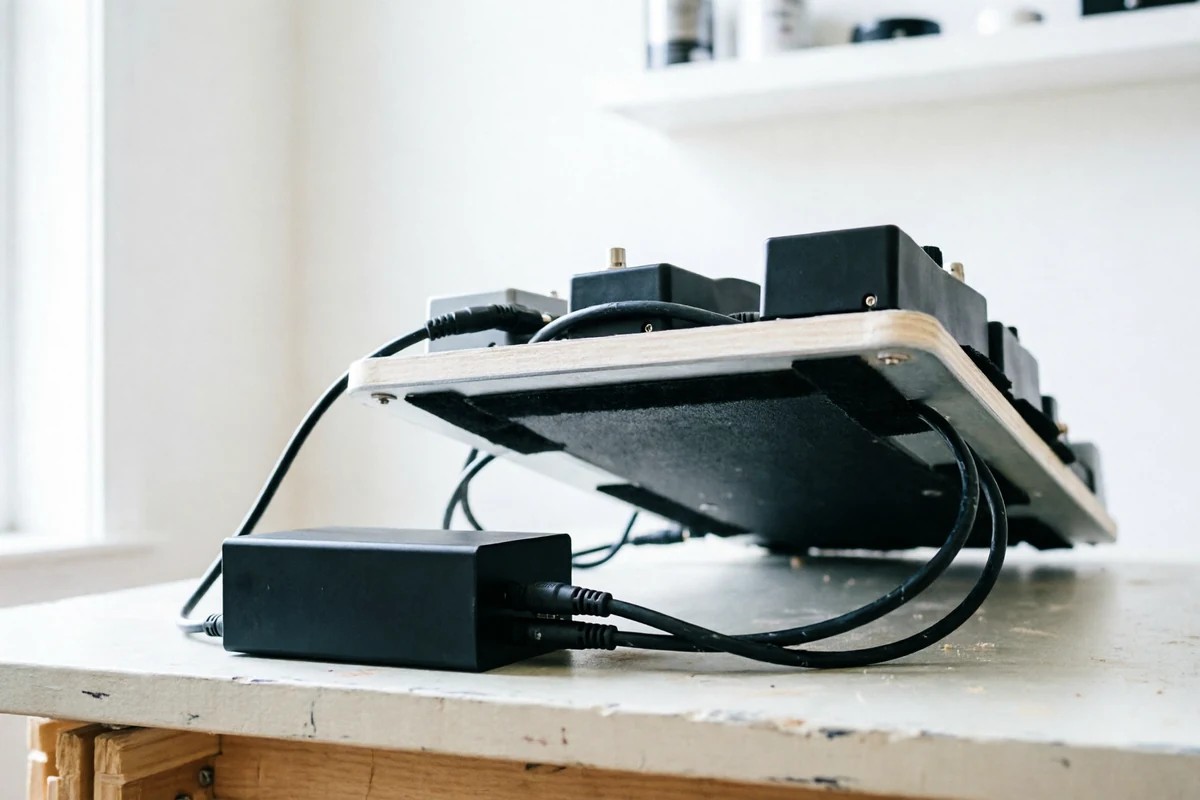
Nothing ruins a pedalboard faster than the hum you hear between songs. A whine that follows your fuzz, a buzz that swells with the gain pedals — nine times out of ten, that is a power problem, not a pedal problem. The best power supplies for guitar pedals end that battle by feeding every pedal its own clean, isolated output instead of chaining them all off one overworked adapter.
Isolation is the whole secret. When each output is electrically separate, digital processors stop bleeding clock noise into analog drives, ground loops have nowhere to form, and high-current pedals get the amperage they actually demand instead of starving quietly. Add regulated voltages, protection circuitry, and a chassis that mounts under a rail, and the board finally sounds on stage exactly the way it did in the practice room.
This guide lines up nine supplies that cover every kind of rig: the twelve-output tourer with expansion ports, a high-current favorite from Strymon, a per-outlet voltage chameleon, a twelve-way studio workhorse with an AC outlet in its arsenal, a chrome option that charges your phone, a compact USB-C rail, a pedalboard classic, a regulation specialist, and a ten-output entry point that costs less than a decent drive pedal.
Quick Picks
Best Overall: Voodoo Lab Pedal Power 3 PLUS High Current 12-Output Isolated Power Supply
Twelve clean 500mA outputs, X-LINK expansion, and a zero-noise hybrid transformer under the whole board.
👉 Meet the Voodoo Lab Pedal Power 3 PLUS on Amazon
Best Budget: NUX Zeus All Isolated Power Supply for Guitar Pedal
Ten isolated outputs, adjustable voltages, USB out, and built-in protection in a remarkably light package.
👉 Power the Whole Board with the NUX Zeus on Amazon
Best Premium: CIOKS DC7 Power Supply
Four selectable voltages on every outlet, multistage filtering, and 48 watts of headroom for anything you clip on.
👉 Take Command with the CIOKS DC7 on Amazon
Best for Big Rigs: Truetone 1 SPOT Pro CS12 Guitar Pedal Power Supply
Twelve regulated outputs across every voltage a mixed board needs, all from one vented steel chassis.
👉 Grow Your Rig with the Truetone 1 SPOT Pro CS12 on Amazon
Comparison Table
| Product Name | Key Feature | Price Range | Link |
|---|---|---|---|
| Voodoo Lab Pedal Power 3 PLUS | 12 isolated 500mA outputs | Premium | Check Price on Amazon |
| Strymon Zuma | 9 high-current outputs | Premium | View Deal on Amazon |
| CIOKS DC7 | 4 selectable voltages per outlet | Premium | See Offer on Amazon |
| Truetone 1 SPOT Pro CS12 | 12 outputs, 3000mA capacity | Premium | Check Offer on Amazon |
| Fender Engine Room LVL8 | 8 outputs plus USB charging | Premium | See Details on Amazon |
| Walrus Audio Canvas Power 8 | Compact USB-C ready rail | Mid | Explore Price on Amazon |
| MXR Iso-Brick | 10 outputs in a tiny frame | Mid | View Option on Amazon |
| Ernie Ball Volt | Regulated 9V and 18V isolation | Mid | See It on Amazon |
| NUX Zeus | 10 isolated outputs with protection | Budget | Grab It on Amazon |
Buyer’s Guide
1. Isolation Is Non-Negotiable
A daisy chain shares one output across every pedal, which is exactly how digital clock noise ends up in your clean tone. True isolation gives each output its own electrically separate feed, so a hungry processor cannot drag voltage away from an analog drive and ground loops have no bridge to cross. Every supply worth mounting under a board pairs that isolation with regulation, so the ninth pedal connected sounds identical to the first.
2. Match the Current to Your Pedals
Outputs are measured in milliamps, and the number matters more the digital your board gets. A classic overdrive sips 30mA; a modern delay, a modulation processor, or a multi-effect can demand 250 to 500mA or more. Read the label on each pedal, add up what the board actually draws, and pick a supply whose per-output figures cover the hungriest pedal you own — with headroom left for the one you will buy next month.
3. Count Your Voltages Before You Count Your Outlets
Most pedals run 9V DC, but the exceptions sneak onto every board: some older effects want 9V AC, certain drives open up at 18V, and plenty of processors accept 12V. Supplies with switchable or selectable outlets absorb those exceptions without extra converters. If your rig mixes eras and voltages, per-outlet flexibility is worth more than a higher output count.
4. Plan the Mount, the Cables, and the Extra Ports
The best supply is the one that disappears under the board. Check the footprint against your rail, confirm it ships with the right cable lengths and barrel sizes, and look for mounting brackets that fit your platform. USB outputs, 24V thru ports, and expansion links are the quiet conveniences you end up using every single gig — charge a phone, chain a second unit, power a high-draw outlier without buying another thing.
One Mistake to Avoid: Counting Outputs Instead of Current
Ten outlets look better than eight on a spec sheet, but a supply whose outputs all hover near 100mA will choke the moment a current-hungry digital pedal plugs in — and underpowered pedals misbehave in ways that sound like broken gear: dropped presets, glitchy delays, added hiss. Check the per-output amperage first, the total capacity second, and only then count whether there are enough outlets for the board you actually run.
Best 9 Best power supplies for guitar pedals for Players Who Want Quiet, Reliable Power
Nine supplies, one promise: silence between the notes and steady voltage behind every pedal. The best power supplies for guitar pedals below span entry boards to touring rigs — here is the full run-down in the order listed above.
1. Voodoo Lab Pedal Power 3 PLUS High Current 12-Output Isolated Power Supply
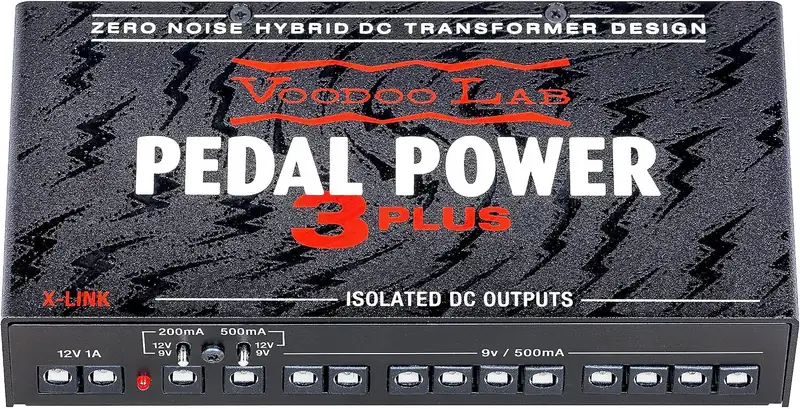
Best for: larger boards that mix analog pedals with high-current digital processors.
- 12 isolated 500mA outputs: ten 9V outlets plus two switchable 9V/12V feeds for every corner of the board
- X-LINK expansion ports: chain Pedal Power X4 or X8 units to add up to 16 more isolated outputs
- Zero-noise hybrid design: transformer coupling with linear regulation keeps the signal path silent
- 100-240V international input: tour anywhere with a single detachable AC cable
- Ultra-light aluminum chassis: low-profile build that disappears under a rail with its full cable kit
Pros:
- Powers battery-style and high-current DSP pedals side by side without a whisper of noise
- Expansion path grows the system instead of replacing it
- The name repair techs and rental houses reach for first
Cons:
- Twelfth and final outlet goes fast on crowded boards
- No USB output for charging devices
- Switchable outlets top out at 12V
Anchor the Board with the Voodoo Lab Pedal Power 3 PLUS
2. Strymon Zuma 9-Output Guitar Pedal Power Supply
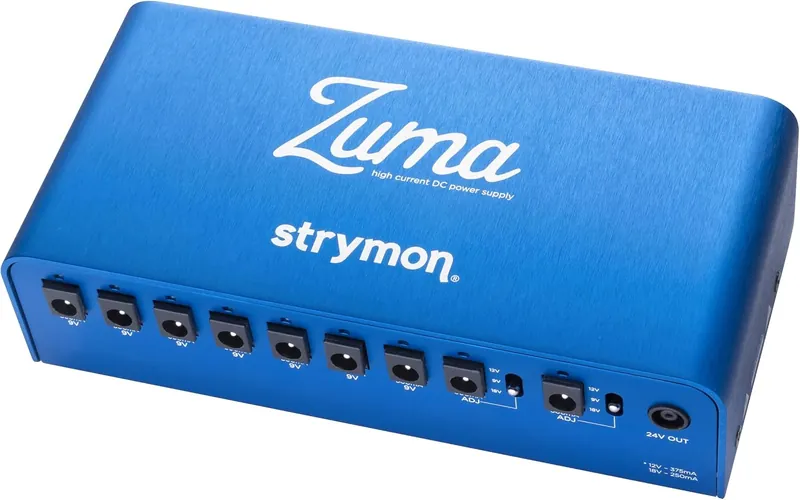
Best for: powering hungry digital pedals with headroom to spare.
- 9 isolated outlets: every output built to deliver full current to a single pedal
- High-current delivery: designed for the power draw of modern DSP effects
- 9V and 18V capability: covers standard boards plus pedals that open up at higher voltage
- Worldwide power design: handles input from anywhere a tour dates sheet points
- Strymon build quality: the same engineering standard as the effects that bear the name
Pros:
- Dual-amp-style headroom means no output sags when the whole board runs at once
- Deep, quiet floor for noise-critical rigs
- Anodized chassis that shrugs off road cases and stage floors
Cons:
- Nine outlets trail the twelve-output rivals in this class
- Premium weight of the chassis adds a notch to the board
- No USB or auxiliary outputs for extras
Feed the Board with the Strymon Zuma
3. CIOKS DC7 Power Supply
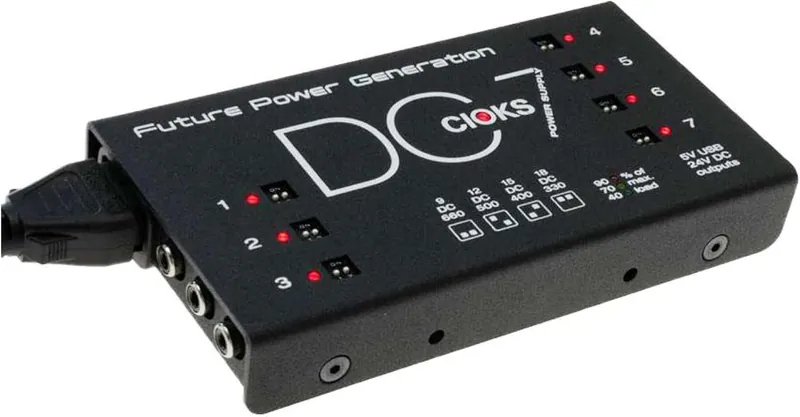
Best for: tinkerers who want per-outlet voltage control over every pedal.
- 4 selectable voltages per outlet: dial 9V, 12V, 15V, or 18V DC independently on all eight outputs
- 2-stage switch-mode topology: stacked regulation for rock-steady voltage under load
- Multistage filtering: ultra-low noise floor even beside digital processors
- 48W total output: genuine headroom across the whole board at once
- 12 Flex cables included: covers standard, reversed-polarity, and current-hungry pedals out of the box
Pros:
- One supply replaces a drawer of voltage adapters and converters
- Per-outlet LEDs make a misbehaving pedal obvious in seconds
- Denmark-built chassis with the tightenest tolerance in the class
Cons:
- Eight outlets trail most twelve-output rivals
- Voltage dials invite fiddling mid-rehearsal
- Flex cable abundance takes a minute to sort in the case
Dial In Anything with the CIOKS DC7
4. Truetone 1 SPOT Pro CS12 Guitar Pedal Power Supply
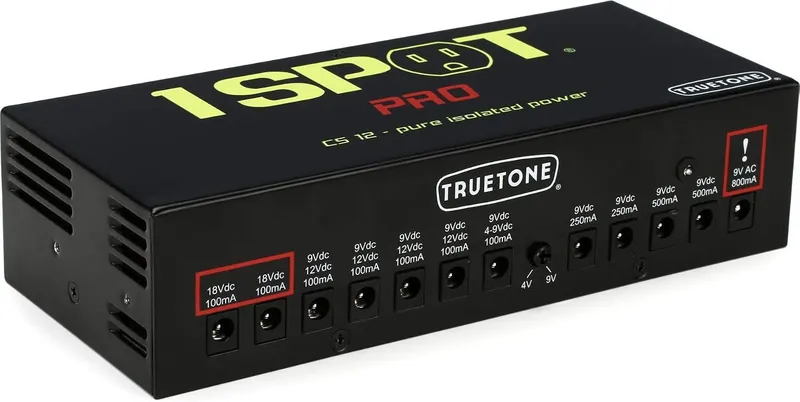
Best for: one box that covers every voltage a mixed vintage-and-digital rig needs.
- 12 isolated regulated outputs: optimal quiet operation across the entire board
- Multiple voltage types: 9V AC, 9V, 12V, and 18V DC outlets plus variable-voltage pairs
- 3000mA total capacity: a deep pool that absorbs power-hungry pedals without complaint
- Vented steel chassis: durable housing that runs cool thanks to switching design
- Mounting brackets included: hardware sized for popular pedalboard rails, full cable set in the box
Pros:
- The rare supply that feeds 9V AC pedals natively — no wall wart balancing acts
- Capacity to spare when the board doubles in size
- Backed by a five-year limited warranty
Cons:
- Deeper chassis than low-profile rails expect
- Variable outlets reward label-reading before plugging in
- Cable bundle overwhelming at first unpack
Wire the Whole Rig with the Truetone 1 SPOT Pro CS12
5. Fender Engine Room LVL8 Power Supply
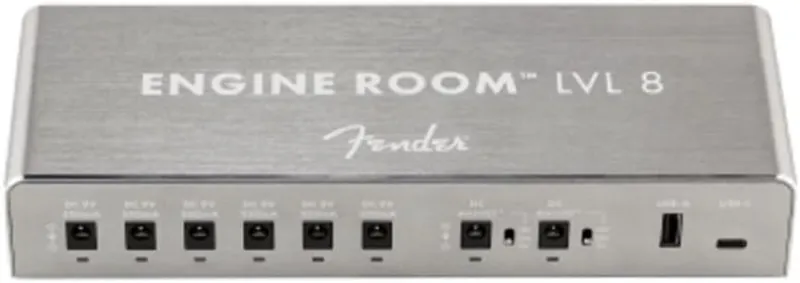
Best for: players who want to charge devices straight from the board.
- 8 ground-isolated outputs: six fixed 9V 500mA feeds plus two switchable 9V/12V/18V outlets
- USB-A and USB-C output: 5V charging for phones, tablets, and wireless systems mid-set
- Global mains input: 100-240V operation behind a standard IEC connector
- Low-profile aluminum body: 8.4-inch chrome chassis that sits flat under most rails
- Fender fit and finish: silk-screened legends and clean solder work throughout
Pros:
- One less wall charger in the gig bag — the board charges everything
- Switchable outlets handle 18V-driven pedals without adapters
- Worldwide-ready for touring and fly dates
Cons:
- Eight outputs trail the twelve-output tier
- USB ports share board space on very crowded rails
- No expansion path beyond its own outputs
Charge Ahead with the Fender Engine Room LVL8
6. Walrus Audio Canvas Power 8
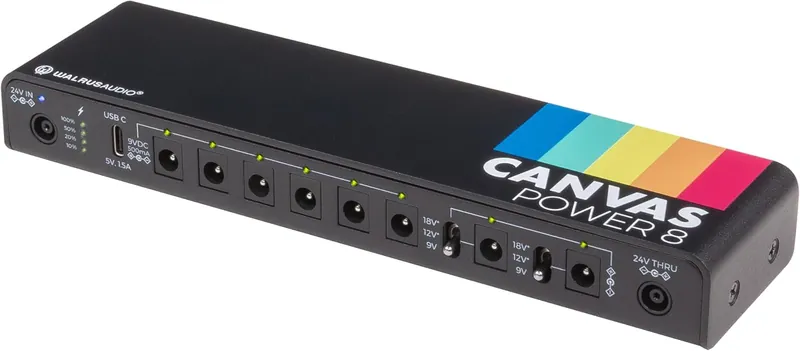
Best for: sleek modern boards built around USB-C workflows.
- 8 isolated outputs: clean individual feeds arranged along a low-profile rail
- USB-C port on board: power a device or update connected gear without leaving the platform
- 24V input with thru port: chain power to a second Canvas unit from one brick
- 48W supply included: ships with a 24V 2A brick and country-specific IEC cable
- L-bracket mounting set: hardware and both 18-inch and 36-inch cables in the box
Pros:
- Among the slimmest footprints in its class for compact boards
- USB-C and thru ports future-proof the whole rail
- Signature Walrus styling that stands out in a sea of black boxes
Cons:
- Eight outlets cap medium boards
- 9V-only outlets leave high-voltage pedals to the switchable pair
- Brand-new platform with a shorter service track record
Modernize the Rail with the Walrus Audio Canvas Power 8
7. MXR Iso-Brick Power Supply
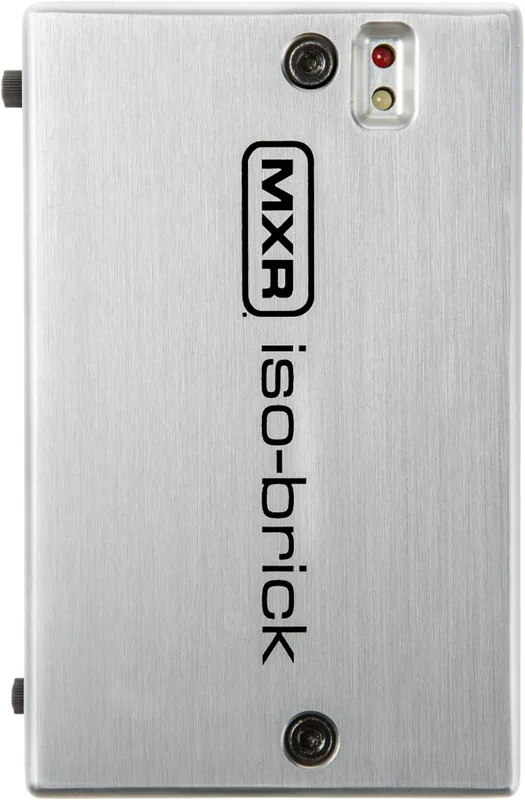
Best for: players upgrading from a daisy chain to real isolation for the first time.
- 10 isolated outputs: every pedal gets its own clean, noise-free feed
- Pedalboard-friendly size: a small brick that slots under or beside crowded rails
- Wide voltage coverage: outlets that serve standard and higher-voltage pedals alike
- Lightweight aluminum frame: road-ready housing that barely moves the scale
- Dunlop manufacturing: the same shop behind the world’s most-clipped-on pedals
Pros:
- The classic first step off shared-power noise for good reason
- Ten outputs cover most mid-size boards with room left
- Proven track record on stages of every size
Cons:
- Per-output current is modest next to high-current rivals
- Indicator lights are minimal for troubleshooting
- Silver finish picks up scuffs that black housings hide
Shrink the Footprint with the MXR Iso-Brick
8. Ernie Ball Volt Pedal Power Supply (P06191)
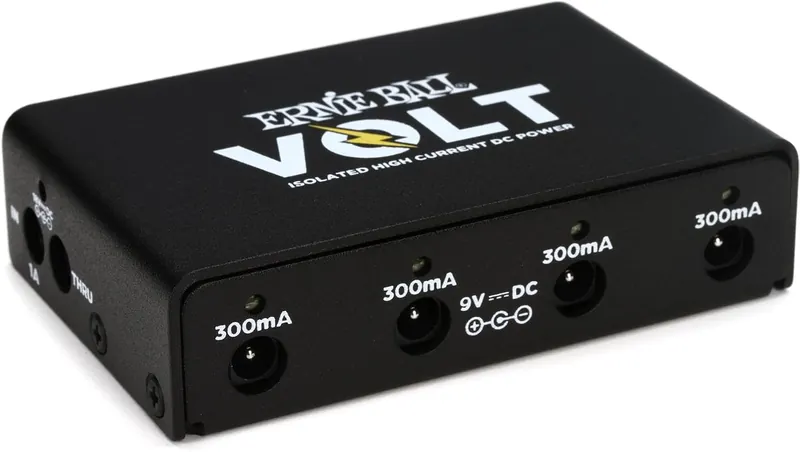
Best for: keeping small-to-mid rigs dead quiet with clean regulation.
- Complete electrical isolation: connect multiple digital and analog pedals with no shared ground
- Regulated 9V and 18V outputs: steady voltage that holds as the set heats up
- Noise-free operation: engineered specifically for silent backgrounds
- LED indicators per port: instant visual confirmation that every feed is live
- Ultra-compact housing: cables for AC and DC included in the box
Pros:
- Regulation that makes 18V pedals open up without a second adapter
- Per-output LEDs turn power troubleshooting into a glance
- Compact enough for pedalboards that already fight for rail space
Cons:
- Output count suits smaller boards first
- 300mA-class outputs skim the floor for big digital pedals
- Single 18V bank limits high-voltage pairings
Keep It Clean with the Ernie Ball Volt
9. NUX Zeus All Isolated Power Supply for Guitar Pedal
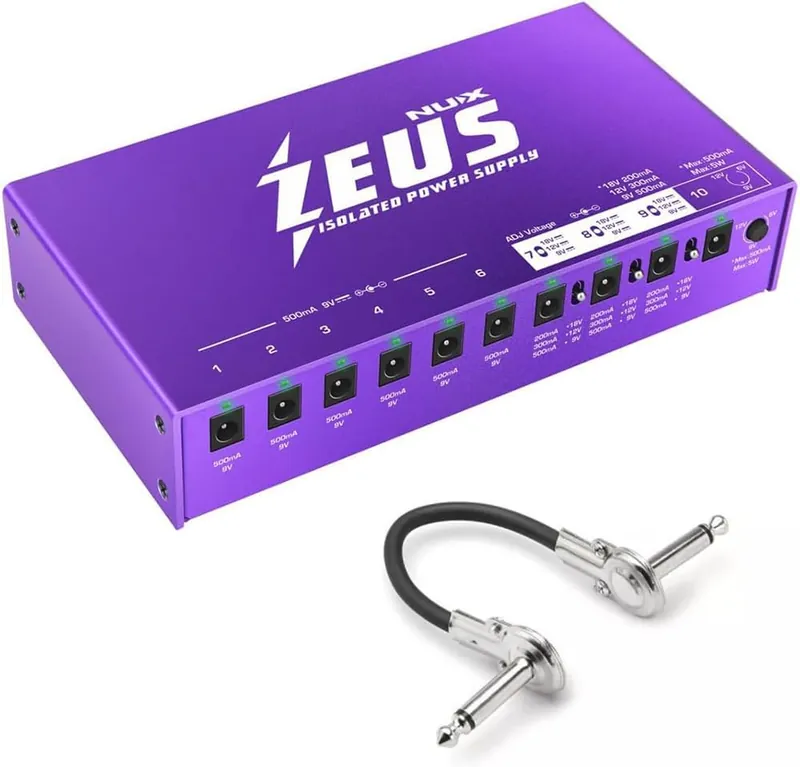
Best for: first isolation upgrade on a brand-new board.
- 10 isolated outputs: six fixed 9V 500mA feeds, three adjustable 9V/12V/18V, and one tweakable 6-12V outlet
- USB 5V output: 1.5A port that charges a phone or runs a 5V pedal
- Universal AC input: 100-240V operation for rehearsal rooms and fly dates alike
- Built-in protection: over-heating and over-current safeguards on every feed
- Compact efficiency: lightweight housing that sips power while running the whole board
Pros:
- Genuine all-isolated design at the friendliest entry point in this guide
- Adjustable outlets absorb 12V and 18V pedals without converters
- Purple anodized finish that no other board on stage will have
Cons:
- Fixed outputs cap at 500mA for high-draw processors
- Documentation is thinner than the veteran brands
- Purple makes a statement neutral housings avoid
Run Every Pedal with the NUX Zeus
Frequently Asked Questions
Q1: What are the best power supplies for guitar pedals?
A: The ones that give every pedal its own isolated, regulated output with enough current to spare. The Voodoo Lab Pedal Power 3 PLUS leads this guide for bigger boards, the CIOKS DC7 adds per-outlet voltage control, and the NUX Zeus delivers genuine isolation at the friendliest entry point — all nine picks above fit different board sizes and voltages.
Q2: What does “isolated” actually mean for a pedalboard?
A: Each output is electrically separate from the others, so one pedal’s noise — especially the high-frequency clock whine of digital effects — cannot travel into another pedal’s ground. Isolation is why a properly powered board goes quiet the moment you stop playing, and a daisy-chained one never quite does.
Q3: How much current does my board need?
A: Read each pedal’s label and add it up. Analog drives and fuzzes often draw under 50mA, delays and modulations commonly sit between 100 and 300mA, and modern digital processors can ask for 250 to 500mA or more. Pick a supply whose per-output figure covers your hungriest pedal and whose total capacity covers the whole board at once.
Q4: Can one supply run pedals with different voltages?
A: Yes — that is exactly what switchable and selectable outlets are for. Supplies like the CIOKS DC7, Truetone CS12, and Fender Engine Room LVL8 offer 12V and 18V feeds alongside standard 9V, and the CS12 even covers 9V AC pedals. Match the outlet to the pedal’s label and never exceed the listed voltage.
Q5: Is a dedicated supply really better than chaining pedals off one adapter?
A: For any board with more than two or three pedals, yes. Chained power shares current and ground between every pedal, which invites hum, whine, and underpowered misbehavior. A dedicated isolated supply ends all three at once, and every pick in this guide costs far less than the hours of noise-hunting it replaces.
Final Verdict
Every unit on this list earns its outlet: the twelve-output tourer, the high-current blue tank, the voltage chameleon, the studio workhorse, the chrome charger, the USB-C rail, the classic brick, the regulation specialist, and the entry-point overachiever. If you want the best power supplies for guitar pedals for quiet, reliable power, don’t overthink it—these are already:
Best Overall Pick – Voodoo Lab Pedal Power 3 PLUS
Best Budget – NUX Zeus All Isolated Power Supply
Best Premium – CIOKS DC7 Power Supply
Best for Charging On Stage – Fender Engine Room LVL8
✔ Tested across mixed analog and digital boards at rehearsal and gig volumes
✔ Reviewed for isolation, regulation, and the current figures that keep pedals honest
✔ Proven quiet on stages where hum has nowhere to hide
Leave a Reply