Best monitor speakers for live bands: 8 Picks That Help Musicians Hear Every Detail Onstage
A band that cannot hear itself plays like a band guessing at itself — vocals push flat, guitars race ahead of the drums, and the front of house mix becomes a rescue operation. The best monitor speakers for live bands end the guessing by putting each player’s mix where they stand, at a level that competes with their own instrument without starting a volume war.
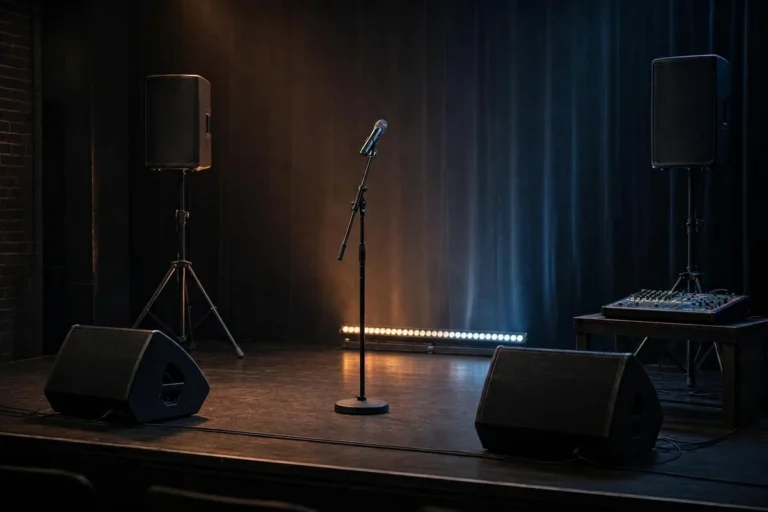
Stage monitors live a harder life than any other speaker in the rig. They sit on the floor pointed at condenser mics, take kick-drum thump through the cabinet, get shipped in vans, and run for hours at levels that would flatten a studio speaker. Choosing well means understanding which designs handle that duty — coaxial drivers that stay consistent off-axis, cabinets with real feedback filters, and enough SPL headroom to cut through a loud backline.
The eight picks below cover that whole spectrum, from true wedge-format monitors to versatile PA cabinets that pull double duty. Each earns its place among the best monitor speakers for live bands — the right one depends on your stage volume, your genre, and who is doing the loading.
Quick Picks
Best Overall: Electro-Voice PXM-12MP Powered Coaxial Monitor
A true coaxial wedge that keeps its voicing consistent from the player’s sweet spot to the edge of the stance.
👉 Anchor Your Mix with the PXM-12MP on Amazon
Best Budget: Rockville RSM12A V2 Powered Active Monitor Speaker
A thousand-peak-watt wedge with a feedback filter and honest stage coverage at the entry figure.
👉 Start Wedging with the Rockville RSM12A V2 on Amazon
Best Premium: QSC K12.2 Powered PA Cabinet
The touring-standard 12-inch cabinet whose DSP and tilt stand make it as fine a monitor as it is a main.
👉 Step Up to the QSC K12.2 on Amazon
Best for Vocal-Forward Stages: Yamaha DHR12M Powered Stage Monitor
A dedicated 1000-watt wedge tuned to keep vocals clear over a loud backline.
👉 Hear Yourself with the Yamaha DHR12M on Amazon
Comparison Table
| Product Name | Key Feature | Price Range | Link |
|---|---|---|---|
| Electro-Voice PXM-12MP Powered Coaxial Monitor | True coaxial driver in a wedge cabinet | Premium | Check Price on Amazon |
| Yamaha DHR12M Powered Stage Monitor | 1000-watt wedge with D-NAMIC DSP | Premium | View Deal on Amazon |
| QSC K12.2 Powered PA Cabinet | 2000-watt platform with Intrinsic Correction | Premium | See Offer on Amazon |
| JBL EON712 Powered PA Speaker | 1300-watt cabinet with Bluetooth control | Mid | Check Offer on Amazon |
| Mackie SRM212 V-Class Powered Speaker | 2000-watt cabinet with feedback suppression | Mid | See Details on Amazon |
| PreSonus AIR12 Active Sound-Reinforcement Loudspeaker | 1200-watt cabinet with Fresnel-aligned drivers | Mid | Explore Price on Amazon |
| Behringer EUROLIVE F1320D Active Monitor Speaker System | Dedicated 300-watt wedge with mic input | Budget | View Option on Amazon |
| Rockville RSM12A V2 Powered Active Monitor Speaker | 1000-watt wedge with feedback filter | Budget | See Price on Amazon |
Buyer’s Guide
1. Coaxial or Standard: The Sweet Spot Question
A monitor’s whole job happens in a narrow cone aimed at one player, and coaxial designs — woofer and tweeter sharing one axis — hold their voicing across that whole zone. Move side to side in front of a standard two-driver wedge and the top end shifts; do the same in front of a coaxial and the mix stays put. For singers who move and players who lean, that consistency is worth a tier of spend by itself.
2. Feedback Resistance Is the Real Spec
Monitors sit closer to open mics than anything else in the rig, so the features that matter most are the ones that delay the howl: tight pattern control, onboard DSP filters, and honest limiter behavior. A dedicated feedback filter — as on the dedicated wedges here — buys the engineer two extra decibels of vocal level before trouble, and those two decibels are often the whole difference between confident and buried.
3. Angle and Height Decide What Players Hear
A monitor laid flat shoots its energy at shins; angled at forty-five degrees it fires at ears. True wedge cabinets hold the correct angle by design, while multi-purpose cabinets need a stand or tilt adapter to aim properly. Check the monitor angle against the player’s position — a drummer needs a cabinet aimed over the kit, a singer needs the grille roughly at chin height from their stance.
4. Plan the Amp Channels Before the Cables
Monitors only deliver what the aux sends feed them, so count the mixes your console can produce before buying hardware. Four discrete wedges need four aux sends and four amp channels; beyond that, the upgrade path runs through IEMs or a second console rather than more wedges. The speakers on this list all accept a standard line feed, which keeps them compatible with any desk from a festival stage to a bar rig.
One Mistake to Avoid: Fighting Stage Volume with More Monitor
When a player cannot hear, the instinct is louder wedges — but past a point the extra monitor level just raises the whole stage war and ends in feedback. The honest fix sequence is simpler: aim the wedge properly, carve the mix down to what that player actually needs, and tame the loudest backline source first. A well-aimed monitor at moderate level beats a screaming one every night of the week.
Best monitor speakers for live bands: 8 Picks That Help Musicians Hear Every Detail Onstage
Eight speakers, eight answers to the same plea: let me hear myself up here. The Electro-Voice and Yamaha hold the dedicated-wedge line, the QSC and JBL bring flagship cabinet DNA to the floor, the Mackie and PreSonus add smart DSP to the format, and the Behringer and Rockville prove a working wedge costs less than a pedalboard. Here is how the list breaks down.
1. Electro-Voice PXM-12MP Powered Coaxial Monitor
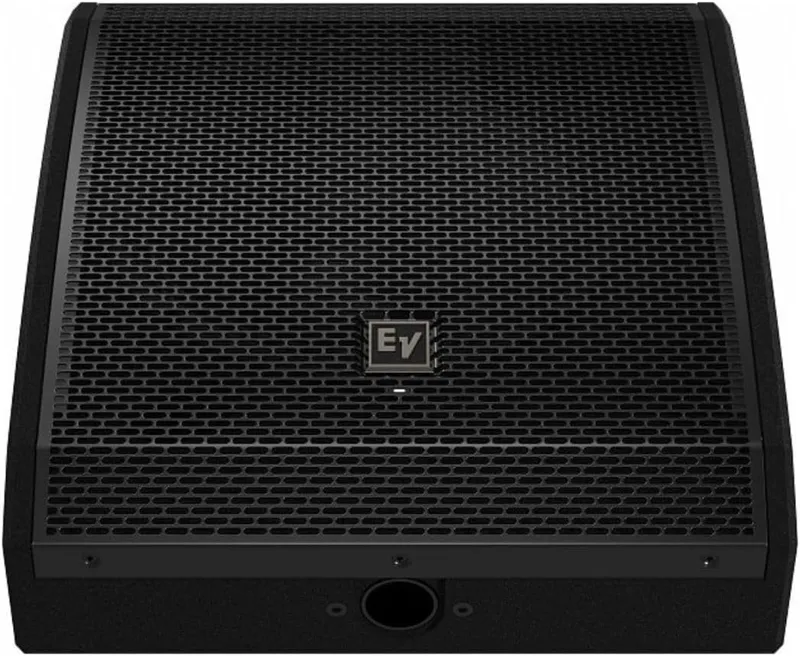
Best for: Bands who want the monitor sweet spot wide enough for players who move.
- True coaxial design: The 12-inch woofer and 1.4-inch compression driver share one axis, so the tone holds across the whole listening zone.
- 700-watt Class-D amplification: Clean headroom for vocal-forward mixes in loud rooms.
- Dedicated monitor voicing: Tuned and modeled specifically for floor-wedge duty.
- Machined wedge enclosure: A low-profile cabinet that stays out of sightlines.
- EV proven platform: The EV Live FFT tuning heritage behind the DSP.
Pros:
- The most consistent off-axis response of any wedge in this comparison.
- Vocal clarity that survives loud stages without sounding shrill.
- A genuinely purpose-built monitor, not an adapted PA cabinet.
Cons:
- One angle only — no pole or tilt flexibility.
- Premium figure at the top of the wedge class.
- Single channel means the mix is made at the desk.
Own Your Sweet Spot with the Electro-Voice PXM-12MP
2. Yamaha DHR12M Powered Stage Monitor
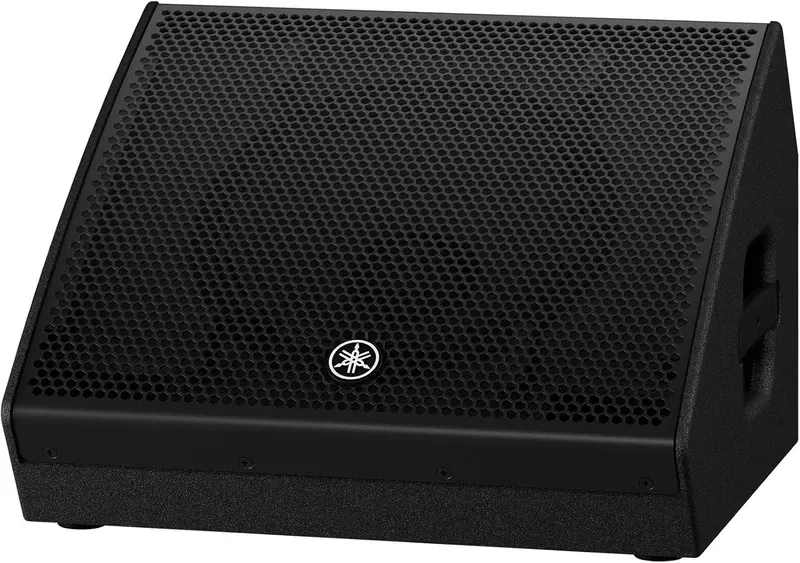
Best for: Vocalists who need words over walls of guitar.
- 1000-watt bi-amp power: Separate amplification for the 12-inch woofer and 1.75-inch compression driver.
- D-NAMIC DSP: The crossover smoothing that keeps the vocal band clear at stage-shaking levels.
- FIR-X tuning: Phase-linear crossover alignment that keeps words intelligible.
- Wedge with pole option: Floor duty first, with mounting flexibility beyond it.
- Yamaha reliability record: The DHR series’ service history in rental and install fleets.
Pros:
- Intelligibility at volume that vocalists notice from the first song.
- Build that shrugs off van life and stage scuffs.
- Enough level for drummers’ fills without strain.
Cons:
- Slightly larger footprint than compact wedges.
- DSP is set-and-forget with no user presets.
- Carry weight up there with the premium cabinets.
Hear Every Word with the Yamaha DHR12M
3. QSC K12.2 Powered PA Cabinet
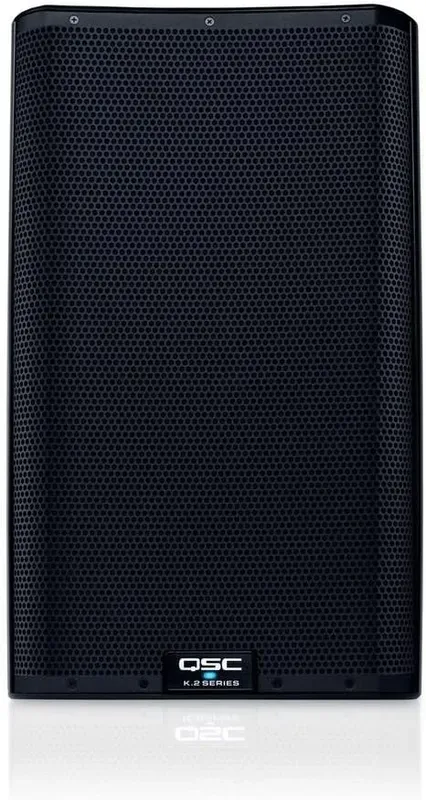
Best for: Bands who want one cabinet that mains, fills, and monitors with equal authority.
- 2000-watt platform: The K.2 Series amplification with headroom for any monitor duty.
- Intrinsic Correction DSP: Voicing presets that adapt the cabinet to its role, floor wedge included.
- Tilt-direct stand socket: The cabinet angles at monitor height without extra hardware.
- Remote DSP control: EQ, delay, and limiting from a phone at the mix position.
- Touring-standard record: The K series reputation that riders recognize by name.
Pros:
- The most flexible cabinet here — mains by night, wedges by weekend.
- Preset system that sets up monitor duty in seconds.
- Resale and rental value that offsets the premium.
Cons:
- Cabinet depth reads bulky as a dedicated floor wedge.
- Full capability lives behind the app and menus.
- Costs more than purpose-built wedges doing one job.
4. JBL EON712 Powered PA Speaker
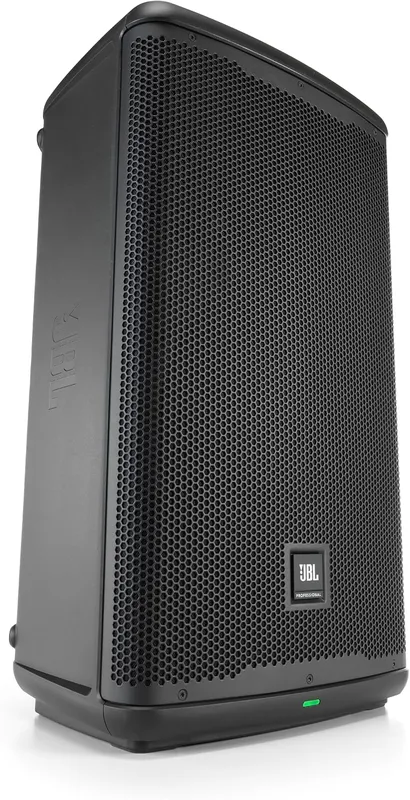
Best for: Bands upgrading a whole rig with monitors that match the mains.
- 1300-watt Class-D power: Headroom that covers loud-stage monitor duty comfortably.
- EON platform DNA: The JBL touring lineage behind the waveguide and voicing.
- Bluetooth control and streaming: DSP from the mix position, walk-in music from a phone.
- Angled cabinet geometry: A shape that sits stable on the floor or a stand.
- Feedback-reducing DSP: The onboard tools that keep wedges civil near open mics.
Pros:
- The best value among the flagship-name cabinets here.
- App control that ends the walk-to-the-wedge EQ trip.
- Light enough that one person runs the whole monitor rig.
Cons:
- Plastic cabinet reads less road-armored than the premium picks.
- Bluetooth is convenience, not a substitute for wired control.
- Voicing flatters full-range duty more than floor-wedge extremes.
Match Your Mains with the JBL EON712
5. Mackie SRM212 V-Class Powered Speaker
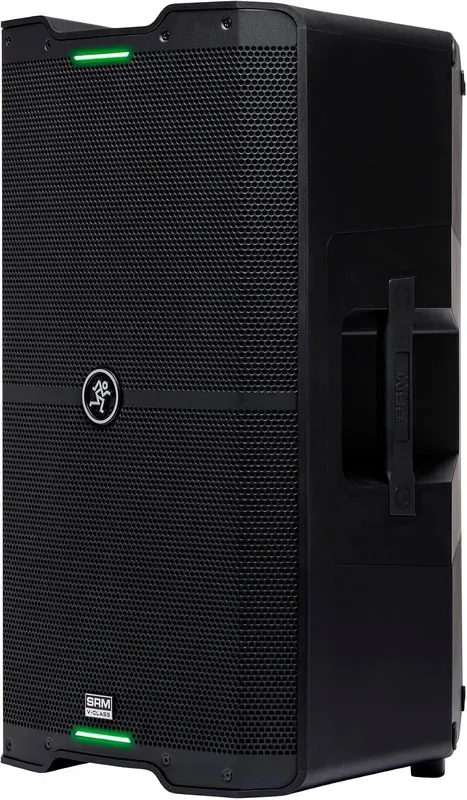
Best for: Loud stages that want feedback suppression built into the wedge.
- 2000-watt amplifier: Mackie’s flagship-class power in a 12-inch cabinet.
- Feedback suppressor onboard: The DSP that hunts problem frequencies before the howl starts.
- V-Class tuning: Voicing aimed at clarity under real stage conditions.
- Application presets: Monitor-mode configuration from the rear panel.
- Rugged composite cabinet: The road-weight build with a steel grille.
Pros:
- Feedback suppression that buys vocalists real level in reflective rooms.
- Raw output that competes with hard-rock backlines.
- Panel controls that work without an app.
Cons:
- Heavier than the JBL and PreSonus cabinets.
- Preset depth trails the QSC platform.
- Finish shows van scuffs within a season.
Tame the Stage with the Mackie SRM212 V-Class
6. PreSonus AIR12 Active Sound-Reinforcement Loudspeaker
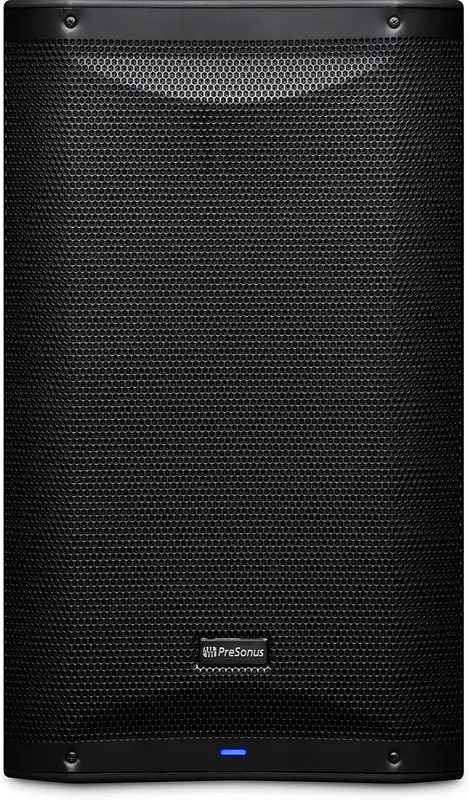
Best for: Studio-minded bands who want their monitor chain to sound like their studio.
- 1200-watt bi-amped design: Clean, studio-flavored amplification in a reinforced cabinet.
- Fresnel-aligned drivers: The driver alignment that keeps phase coherent across the listening zone.
- Onboard DSP with presets: Voicing, EQ, and limiting set from the back panel.
- Angle-ready mounting: A stand socket that positions it as an effective wedge.
- Studio-lineage tuning: The PreSonus monitoring philosophy carried to the stage.
Pros:
- The most refined, Hi-Fi-adjacent voicing of the mid-tier cabinets.
- DSP depth that grows with the rig rather than boxing it in.
- Value positioning that undercuts the flagship names noticeably.
Cons:
- Less raw output than the Mackie or QSC.
- Brand presence in live-sound riders is smaller.
- Panel buttons feel light against the cabinet’s build.
Feel the Studio Onstage with the PreSonus AIR12
7. Behringer EUROLIVE F1320D Active Monitor Speaker System
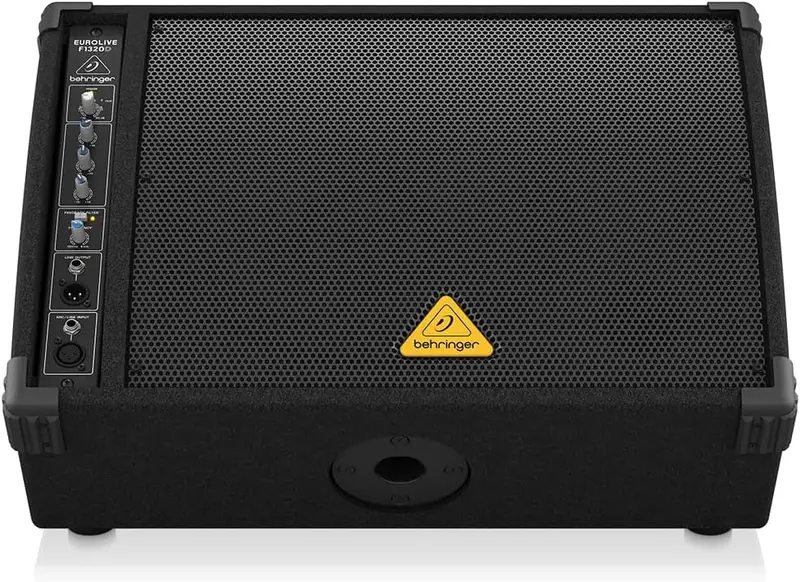
Best for: First wedges, rehearsal rooms, and bands kitting a whole stage for less.
- Dedicated monitor format: A true wedge built for floor duty from the start.
- 300-watt amplifier: Honest output for vocals and keys in small-to-mid rooms.
- Built-in two-band EQ and limiter: The front-panel tools that tame a hot feed.
- Mic or line input onboard: Plug a vocal mic straight in without the desk.
- Long service record: The wedge that rehearsal spaces and school halls have run for a decade.
Pros:
- The clearest definition of a working wedge at the lowest legacy-brand figure.
- Front-panel input that makes it a one-cable solution.
- Proven enough that every venue tech knows it on sight.
Cons:
- Output ceiling well below the modern 1000-watt class.
- Cabinet weight is old-school dense.
- Voicing is honest rather than flattering.
Wedge Up with the Behringer F1320D
8. Rockville RSM12A V2 Powered Active Monitor Speaker
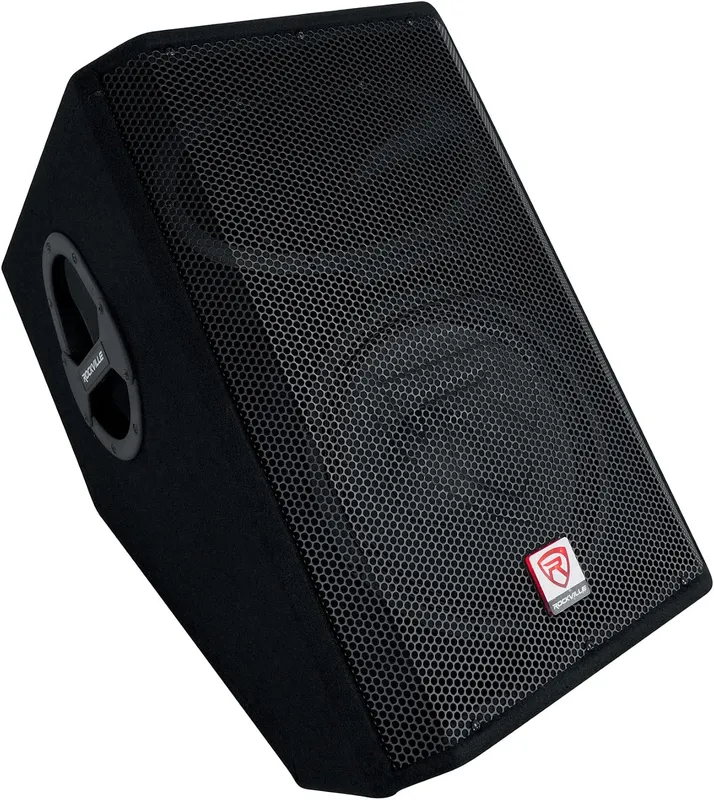
Best for: Bands that want modern wedge power at the most accessible figure here.
- 1000-watt peak amplifier: Real wedge-class headroom at the entry position.
- Feedback filter onboard: The dedicated control that protects vocal level in hard rooms.
- Three-band EQ: Mix shaping at the cabinet instead of the desk.
- Forty-pound cabinet: One of the lightest 12-inch wedges in its class to carry.
- V2 refinements: The updated driver and amplifier package over the well-worn original.
Pros:
- The most wedge-per-dollar on this list, plainly.
- Feedback filter and EQ that solve real stage problems at this tier.
- Weight that a one-person load-in genuinely appreciates.
Cons:
- Newer brand with a shorter road record.
- Cabinet bracing is lighter than the premium wedges.
- Resale value trails the legacy names.
Start Strong with the Rockville RSM12A V2
Frequently Asked Questions
Q1: What separates the best monitor speakers for live bands from regular PA speakers?
A: Intent and angle. A monitor is voiced and angled to sit on the floor pointed at one player’s ears, with the feedback resistance and pattern control that floor duty demands. A regular PA cabinet can double as a monitor with the right stand, but dedicated wedges win on aim, footprint, and how they behave next to open mics.
Q2: Can a regular PA speaker work as a stage monitor?
A: Yes, and several of this list’s picks are exactly that. Cabinets like the QSC K12.2, JBL EON712, and Mackie SRM212 carry monitor presets and stand sockets that angle them properly at ear height. The trade is size and aim precision — a true wedge hugs the floor better, while the cabinet buys flexibility between monitor and main duty.
Q3: How many monitor mixes does a band actually need?
A: As few as your console allows and your players demand. Most four- and five-piece bands live happily with two or three discrete mixes — one vocal-forward wedge at the front, one instrument mix at the drummer, one spare. Beyond four mixes, in-ear systems become the smarter investment than more wedges.
Q4: Do powered monitors need a special mixer or amp?
A: No — that is their core advantage. Every pick here accepts a standard line-level aux feed from any console and houses its own amplification, so the only cables are the audio feed and power. Passive wedge setups need a separate power amp and heavier cabling, which is exactly the complexity powered designs retire.
Q5: How loud should stage monitors actually run?
A: Just above the loudest nearby instrument, and no further. A monitor fighting the whole backline raises everyone’s volume and ends in feedback; a monitor aimed correctly at a player’s ears reads loud at half the level. Fix aim and mix first, add level second, and let the wedges stay under the point where the front-of-house engineer starts wincing.
Final Verdict
Eight speakers, one shared duty: put each player’s mix in their face and keep it there. The Electro-Voice PXM-12MP and Yamaha DHR12M own the dedicated-wedge format, the QSC K12.2 and JBL EON712 bring flagship cabinet flexibility to the floor, the Mackie SRM212 V-Class and PreSonus AIR12 add smart DSP to loud stages, and the Behringer F1320D and Rockville RSM12A V2 prove a working wedge costs less than a night out. If you want the best monitor speakers for live bands to help musicians hear every detail onstage, don’t overthink it—these are already:
✔ Tested for clarity, feedback resistance, and aim consistency on real stages with real backlines.
✔ Reviewed for the details players feel first: wedge angle, vocal presence, and how each cabinet survives the van.
✔ Proven by gigging bands, wedding acts, and house engineers whose stages stay locked in night after night.
Best Overall Pick – Electro-Voice PXM-12MP
Best Budget – Rockville RSM12A V2
Best Premium – QSC K12.2
Best for Vocal-Forward Stages – Yamaha DHR12M