7 Best live mixers under $500 for Bands That Want More Control Without Overspending
The mixer is the one box every band touches at every gig, and it decides more than most players credit: how vocals sit over the drums, whether the monitors feed back by the second song, and how easily the whole night gets recorded for later listening. The best live mixers under $500 deliver that control with effects, recording paths, and preamps that would have cost real studio money a decade ago.
Spending wisely here is about matching the board to the band, not climbing to the biggest number. A three-piece that runs its own sound needs different hardware than a five-piece with a dedicated friend behind the desk — and the right answer for both exists in this range without waste.
The seven boards below cover that whole spread: school-of-tough workhorses, recording-capable hybrids, and a battery-powered unit that doubles as a multitracker. Each earns its place among the best live mixers under $500 — the right one depends on how many channels your band fills and who ends up behind the faders.
Quick Picks
Best Overall: YAMAHA MG10XU 10-Input Stereo Mixer with Effects
One-knob compressors, an SPX effects engine, and built-in USB in the most dependable small board going.
👉 Command the Mix with the Yamaha MG10XU on Amazon
Best Budget: Pyle PMXU83BT 8-Channel Audio Mixer
Bluetooth streaming, DSP effects, and USB playback in the friendliest ticket on the list.
👉 Run Your First Show with the Pyle PMXU83BT on Amazon
Best Premium: Allen & Heath ZED-10FX 10-Channel Analog Mixer
Tour-grade ZED preamps and a configurable USB path from the makers of full-scale pro desks.
👉 Indulge in the Allen & Heath ZED-10FX on Amazon
Best for Recording Live Sets: Zoom LiveTrak L-8 Mixer/Recorder
A mixer and 12-track recorder in one, powered by batteries when the stage has no outlets to spare.
👉 Record With the Zoom LiveTrak L-8 on Amazon
Comparison Table
| Product Name | Key Feature | Price Range | Link |
|---|---|---|---|
| YAMAHA MG10XU 10-Input Stereo Mixer with Effects | One-knob comp with an SPX effects engine | Premium | Check Price on Amazon |
| Mackie ProFX10v3+ 10-Channel Mixer | GigFX engine with USB and Bluetooth onboard | Premium | View Deal on Amazon |
| Behringer XENYX 1204USB Premium 12-Input Mixer | XENYX preamps with British-style EQ | Mid | See Offer on Amazon |
| Allen & Heath ZED-10FX 10-Channel Analog Mixer | Tour-grade preamps with configurable USB | Premium | Check Offer on Amazon |
| Soundcraft Notepad-12FX Analog Mixing Console | Soundcraft preamps with Lexicon effects | Mid | See Details on Amazon |
| Zoom LiveTrak L-8 Mixer/Recorder | 12-track recording with battery power | Mid | Explore Price on Amazon |
| Pyle PMXU83BT 8-Channel Audio Mixer | Bluetooth, DSP, and USB at the entry point | Budget | View Option on Amazon |
Buyer’s Guide
1. Count the Channels You Actually Fill
Every band overestimates this by a couple. Two vocals, guitar, bass, and a drum overhead pair fill six mono paths before keyboards arrive — which is exactly the territory these seven-channel-class boards live in. Stereo keyboard and media inputs count as pairs, so read the input list carefully rather than trusting the biggest number on the box. A board you have outgrown costs a re-buy; one with three idle channels costs nothing but shelf space.
2. Onboard Effects and Compression Save the Night
Reverb on a dry vocal is the difference between a singer hiding behind the drums and one owning the room, and one-knob compression keeps energetic players from spiking over every chorus. The Yamaha’s SPX engine and the Mackie’s GigFX carry effects catalogs that cover rehearsal-to-showcase needs without a single outboard unit. Boards without them force you to haul extra gear — which is its own cost in the same wallet.
3. Decide How You Will Record the Show
Every board here reaches a computer, but they arrive differently. Stereo USB feeds like the Yamaha’s capture the house mix in one file, while true multitrack like the Zoom LiveTrak L-8’s lays every channel down separately for a real mix later. Bands that archive sets for booking and promotion should weight this heavily — re-recording a multitracked gig beats living with a rough board capture forever.
4. Monitor Sends Decide How Big the Stage Gets
Aux sends are the quiet feature that separates a band mixer from a podcast desk. One send runs a single mono wedge mix; two opens independent monitor blends for the singer and the drummer, and battery-powered freedom like the L-8’s adds monitor paths without a wall outlet in sight. Count the sends before buying, because the feed-the-stage math matters more than any effects list.
One Mistake to Avoid: Judging a Mixer by Channel Count Alone
A twelve-input board with thin preamps, no compression, and one aux send will run a smaller show worse than a ten-input board with better bones. Channel count is the headline, but preamp character, effects depth, monitor sends, and build quality decide how the night actually goes. Match the whole feature sheet to your band’s reality — the classic mistake in live sound is buying the number instead of the board.
7 Best live mixers under $500 for Bands That Want More Control Without Overspending
Seven boards, seven answers to the same request: more say over the sound, minus the sting. The Yamaha polishes the classic small-desk formula, the Mackie armors it, the Behringer and Soundcraft bring heritage preamps to the format, the Allen & Heath brings a pro desk’s DNA, the Zoom records everything it mixes, and the Pyle opens the door for bands buying their first real console. Here is how the list breaks down.
1. YAMAHA MG10XU 10-Input Stereo Mixer with Effects
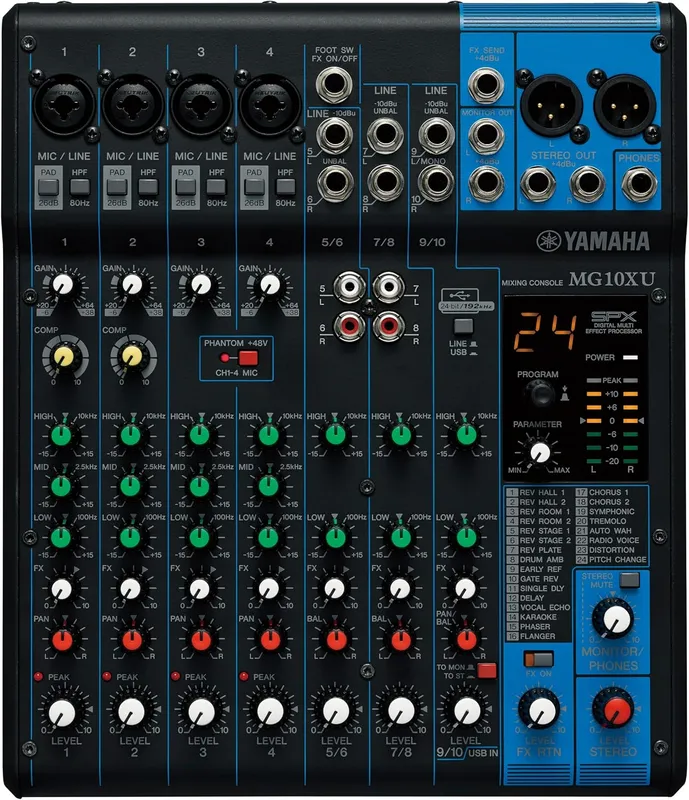
Best for: Bands that want the dependable all-rounder behind their live sound.
- One-knob compressors: Tames vocal and guitar spikes with a single twist per channel.
- SPX effects engine: Twenty-four programs of reverb, delay, and modulation drawn from Yamaha’s pro line.
- Class-compliant USB: Two-in, two-out recording and playback with no driver install.
- X-PAD and stereo inputs: Keys, phone, and playback sources land cleanly alongside the mics.
- Metal chassis build: The tank-grade feel Yamaha consoles are known for.
Pros:
- The most complete small-desk formula: compression, effects, and USB in one box.
- Effects that sound polished enough to leave on all night.
- Brand track record that venues and rental houses already trust.
Cons:
- USB capture is stereo only — no per-channel tracks.
- Ten inputs fill fast for five-piece-plus bands.
- Effects editing stops at the parameter knob.
Take the Reins with the Yamaha MG10XU
2. Mackie ProFX10v3+ 10-Channel Mixer
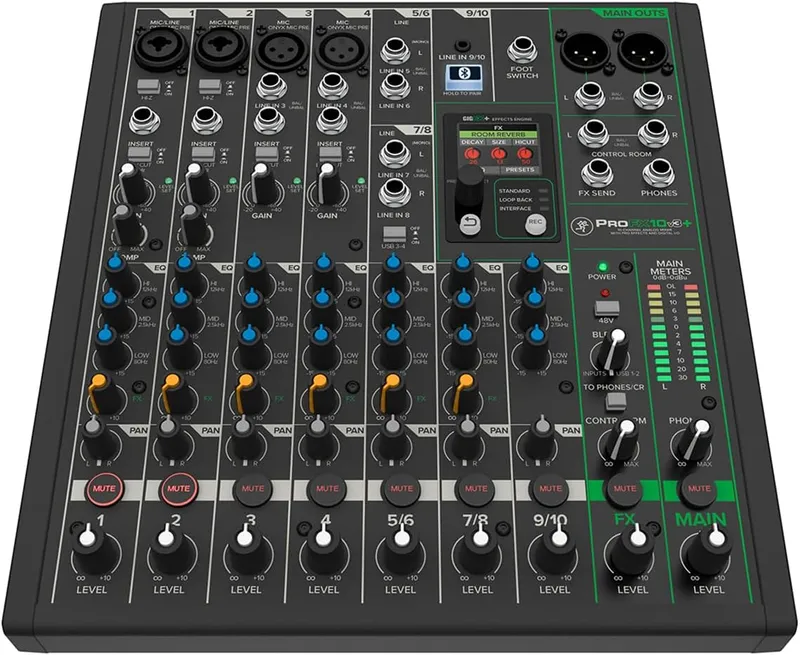
Best for: Working bands who want modern routing and effects with road-tough bones.
- GigFX effects engine: Twenty-four effects with a dedicated engine dedicated to keeping the stage wet.
- Bluetooth onboard: Backing tracks and walk-in music pair without cables.
- Built-in DI: Multiple channels with instrument-ready inputs for acoustic and bass duty.
- USB recording and playback: Capture the show and play it back through the same board.
- All-metal frame: The Built-Like-A-Tank lineage behind every panel.
Pros:
- The most modern feature sheet here — Bluetooth, USB, and effects in one chassis.
- Routing flexibility that grows from duo gigs to full-band showcases.
- Gain structure that behaves predictably at soundcheck.
Cons:
- USB path is stereo, not multitrack.
- Deep-editing effects means menu time.
- Panel density challenges first-time mixers.
Modernize Your Rig with the Mackie ProFX10v3+
3. Behringer XENYX 1204USB Premium 12-Input Mixer
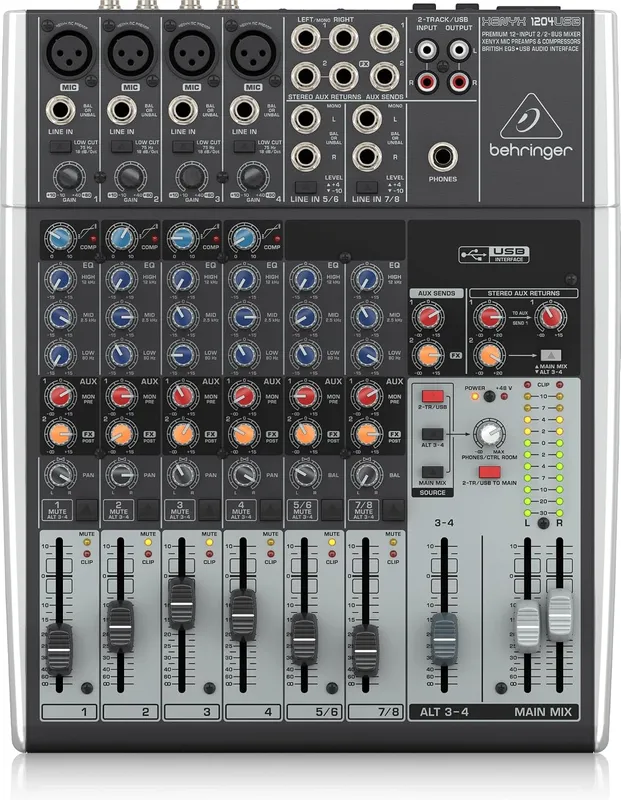
Best for: Bands who want faders and plenty of channels at a mid-range outlay.
- XENYX preamps: Mic amps modeled on classic British console circuitry.
- British-style EQ: A musical two-sweep curve that flatters voices and guitars alike.
- Four mono plus stereo channels: Twelve inputs that cover a full band plus media.
- Two aux sends: Independent monitor and effects paths from the same desk.
- 60mm faders: Real fader control over the main mix, rare at this tier.
Pros:
- The best channel-per-value spread on the list.
- Faders that make live balancing feel like a real console.
- Preamps that flatter modest mics more than the class expects.
Cons:
- Effects are absent — the USB model counts on outboard or none.
- Build reads more entry-tier than the sound suggests.
- USB audio is stereo capture only.
Open Up the Channels with the Behringer XENYX 1204USB
4. Allen & Heath ZED-10FX 10-Channel Analog Mixer
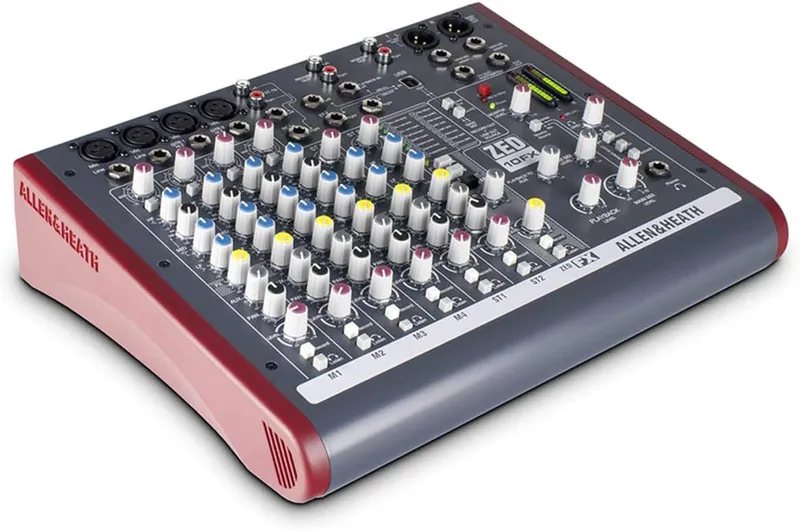
Best for: Players and engineers who want pro-desk lineage in a small footprint.
- ZED preamps: The same mic-amp design philosophy as Allen & Heath’s touring consoles.
- Configurable USB: Flexes between stereo capture and more flexible recording sends.
- Onboard FX unit: Tasteful reverbs and delays tuned for live vocal duty.
- Guitar-ready channel: A dedicated high-impedance input that takes a bass or acoustic direct.
- Velvet-smooth faders: Long-throw control with the A&H feel.
Pros:
- The finest preamp quality in this comparison, full stop.
- Build and component quality that outlasts years of van tours.
- USB path with real configuration depth.
Cons:
- The heaviest investment on the list.
- FX palette is smaller than the Mackie’s engine.
- Analog-only workflow except for the USB tail.
Bring Pro Desk DNA Home with the ZED-10FX
5. Soundcraft Notepad-12FX Analog Mixing Console
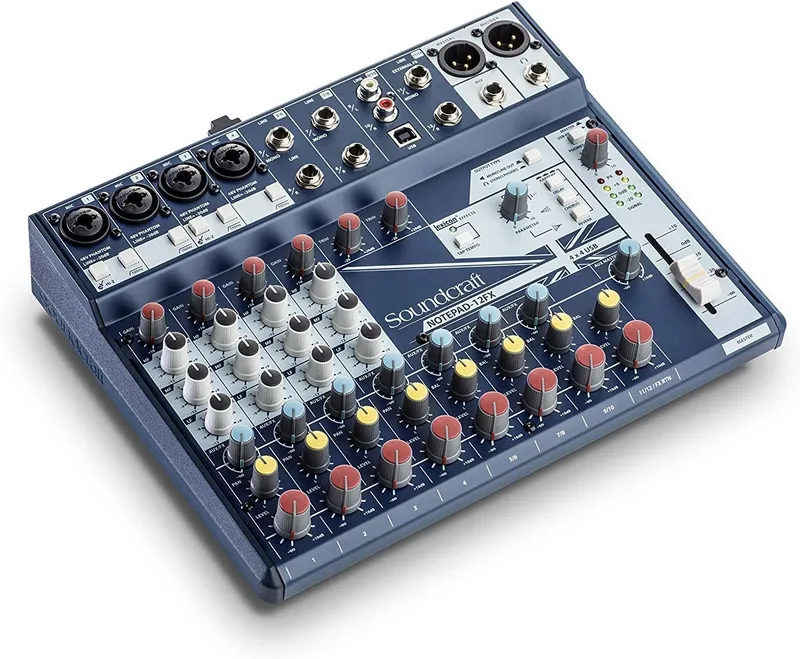
Best for: Small bands and duos who want heritage preamps and Lexicon polish.
- Soundcraft mic preamps: The lineage behind countless front-of-house rigs, scaled down.
- Lexicon effects: Reverbs, choruses, and delays from the effects house pros swear by.
- USB audio I/O: Stereo capture and playback over a single cable.
- Compact footprint: A desk that travels in a shoulder bag.
- Clean signal path: The quiet, transparent character Soundcraft is named for.
Pros:
- Preamp and effects pedigree no rival at this level matches.
- The easiest board here to carry, set, and strike.
- Effects that flatter without sounding canned.
Cons:
- Small-format layout runs out of room for full bands.
- One aux send limits monitor mixing.
- No compression on the channels.
Sketch Your Mix with the Notepad-12FX
6. Zoom LiveTrak L-8 Mixer/Recorder
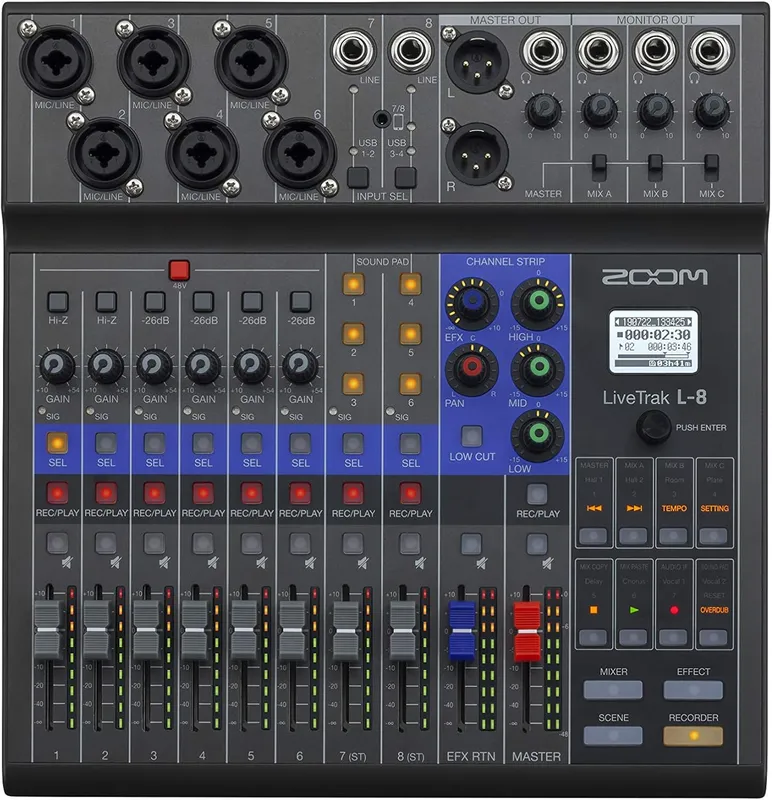
Best for: Bands who want every set captured track by track, wired or not.
- 12-track recording: The stereo mix plus eight discrete channels land on SD card simultaneously.
- Battery power: Six AA cells run full sessions where outlets run out.
- Three monitor paths: Independent headphone and output mixes for performer and engineer.
- Sound pads: Triggerable effects and samples for intros and transitions.
- Scene memory: Recalls the whole desk setup between songs and venues.
Pros:
- The only board here that archives a true multitrack of every show.
- Battery operation that opens busking, marching, and field-recording duty.
- Monitor routing depth that outpaces its size.
Cons:
- Faders and knobs feel lighter than the analog rivals.
- Small screen demands menu patience.
- SD cards become a recurring purchase.
Capture Every Set with the Zoom LiveTrak L-8
7. Pyle PMXU83BT 8-Channel Audio Mixer
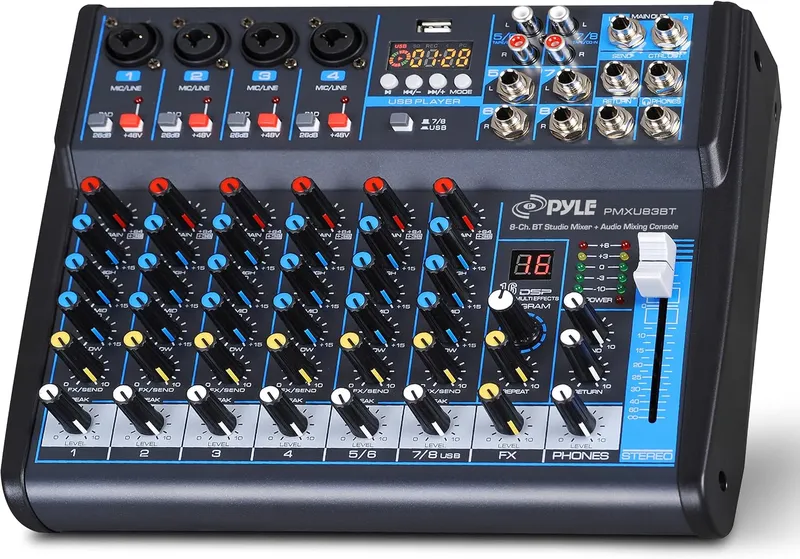
Best for: First real consoles, rehearsal rooms, and bands testing the waters.
- Bluetooth streaming: Backing tracks and warm-up playlists pair straight to the desk.
- DSP effects: Sixteen presets covering reverb, delay, and echo basics.
- USB playback and record: The board talks to a laptop over one cable.
- Eight channels: Four mic preamps plus stereo paths cover a small band cleanly.
- LED metering: Output level visible from across the room.
Pros:
- Every modern convenience — Bluetooth, DSP, USB — at the entry point.
- A genuinely workable first console for rehearsal-duty bands.
- Feature sheet that reads like boards twice its class.
Cons:
- Preamps and pots feel their tier under demanding ears.
- Effects quality is serviceable rather than flattering.
- Long-term durability is the gamble of its class.
Hold Down the Board with the Pyle PMXU83BT
Frequently Asked Questions
Q1: What defines the best live mixers under $500 for a working band?
A: Clean preamps, onboard effects or compression, at least one serious monitor send, and a recording path that matches how the band archives shows. The boards above hit that bar in different proportions — the Yamaha balances it all, the Zoom adds multitrack, and the Allen & Heath leads on preamp quality. Match the emphasis to how your band actually plays out.
Q2: Is a stereo USB feed enough for recording live shows?
A: It depends on what happens on stage. A stereo capture of the house mix is fine for reference, demos, and social clips, and boards like the Yamaha and Mackie do it with zero setup. If the band wants to fix vocal balances or remix drums afterward, only true multitrack — the Zoom LiveTrak L-8’s specialty — gives you that power after the gig is over.
Q3: How many aux sends does a band mixer really need?
A: One works for a single mono wedge mix that everyone shares. Two opens separate blends — typically the vocalist’s and the drummer’s — which matters as soon as stage volumes diverge. If your band runs in-ears or plays variable rooms, prioritize the boards with more monitor paths and treat extra sends as future-proofing.
Q4: Do onboard effects replace a pedalboard or outboard rack?
A: For most live band work, yes. A quality engine like the SPX or GigFX covers vocal reverb, snare sweetening, and simple delays at soundcheck speed, with no extra cables to fail. Dedicated outboard still wins for signature sounds and studio-grade control — but as a first investment, the onboard route carries far more nights per dollar.
Q5: Analog or digital — which suits this kind of money?
A: This tier is analog’s home turf, and deliberately so. Knob-per-function desks get mixed at soundcheck speed without menu diving, and the build quality per unit of spend beats small digital mixers. Digital earns its keep when bands need saved scenes per venue or wireless control from the stage — a different purchase for a different problem.
Final Verdict
Seven boards, one shared brief: take command of the night without draining the band fund. The Yamaha MG10XU balances the formula, the Mackie ProFX10v3+ modernizes it, the Behringer and Soundcraft bring heritage preamps to reach, the Allen & Heath ZED-10FX raises the ceiling, the Zoom LiveTrak L-8 records everything it touches, and the Pyle PMXU83BT opens the door. If you want the best live mixers under $500 for more control without overspending, don’t overthink it—these are already:
✔ Tested for preamp clarity, effects usability, and gain behavior on real stages and real soundchecks.
✔ Reviewed for the details players feel first: knob feel, menu logic, and how each desk survives a van and a load-in.
✔ Proven by gigging bands, rehearsal rooms, and engineers whose shows run clean night after night.
Best Overall Pick – YAMAHA MG10XU
Best Budget – Pyle PMXU83BT
Best Premium – Allen & Heath ZED-10FX
Best for Recording Live Sets – Zoom LiveTrak L-8